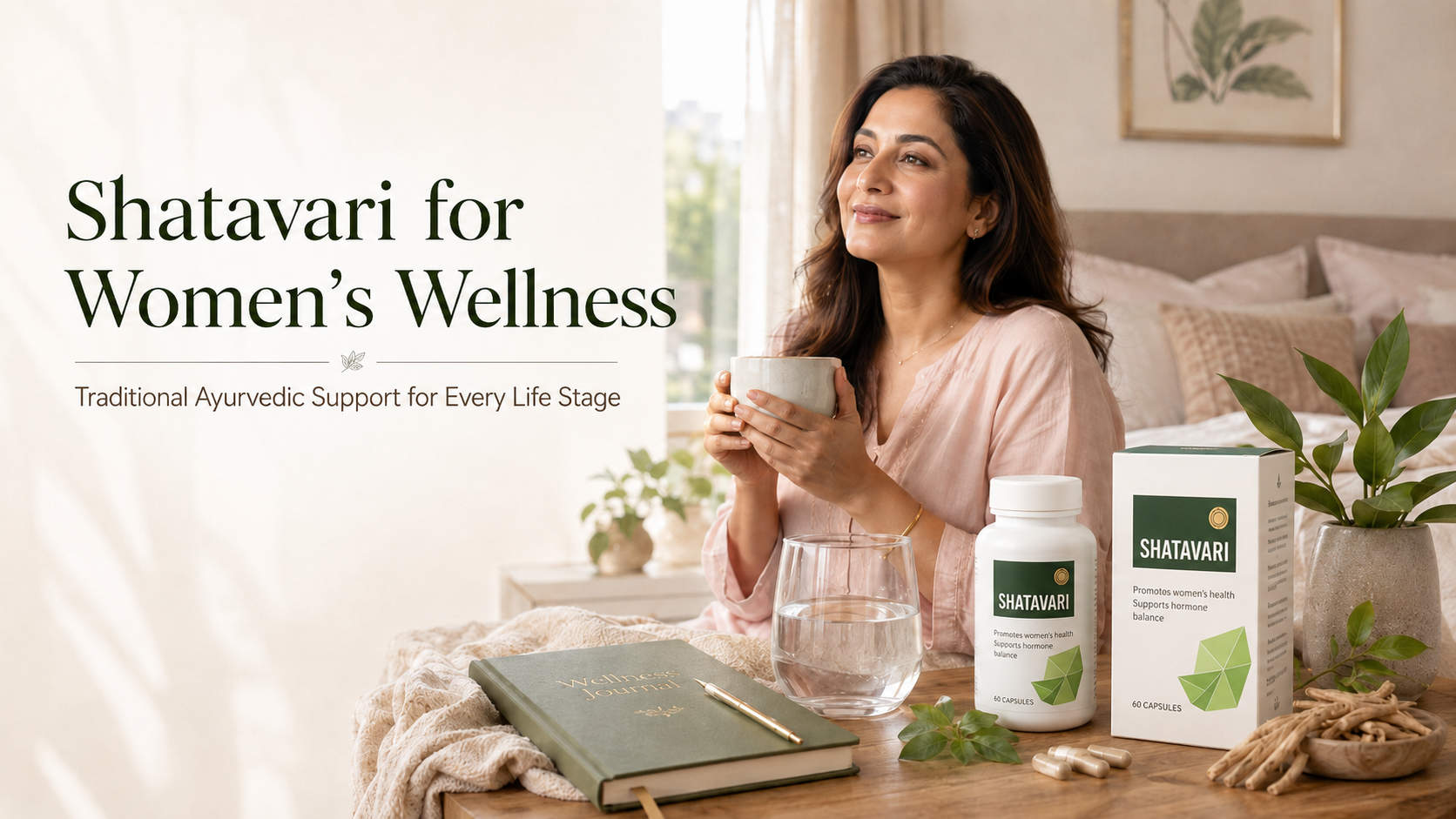
Shatavari is frequently described as one of Ayurveda’s best-known herbs for women’s wellness.
It is commonly marketed for:
- Hormonal wellness
- Menstrual comfort
- Menopausal support
- Reproductive health
- Lactation
- Energy and vitality
- General feminine wellness
However, traditional use, commercial marketing and strong scientific evidence are not the same thing.
Recent clinical studies have reported promising findings for specific standardised Shatavari extracts in areas such as menopausal and perimenopausal symptoms. However, these studies used defined formulations under controlled conditions and do not prove that every Shatavari powder, capsule or extract produces the same result. Larger and longer independent studies are still needed.
The practical answer is:
Shatavari may be included as complementary Ayurvedic wellness support, but it should not replace medical evaluation or prescribed treatment for irregular periods, infertility, PCOS, severe menopausal symptoms or other hormonal concerns.
Medical disclaimer: This article is intended for general education and does not replace medical advice, diagnosis or treatment. Consult a qualified healthcare professional before using Shatavari if you are pregnant, breastfeeding, taking medicine or managing a hormonal or reproductive-health condition.

What Is Shatavari?
Shatavari is the common Ayurvedic name for Asparagus racemosus, a medicinal plant traditionally used in India.
Its roots contain several naturally occurring compounds, including steroidal saponins commonly described as shatavarins. The exact composition of a finished supplement can vary according to the plant source, extraction process, standardisation and manufacturing quality.
Shatavari products may be available as:
- Root powder
- Capsules
- Tablets
- Liquid extract
- Syrup
- Herbal combinations
These forms are not automatically equivalent. A concentrated extract may differ substantially from plain root powder.
Why Is Shatavari Associated With Women’s Wellness?
In traditional Ayurvedic practice, Shatavari has been used as a restorative herb associated with women’s reproductive and general wellness.
Modern products commonly position it for:
- Hormonal balance support
- Menstrual wellness
- Reproductive health
- Menopause-related wellness
- Lactation support
- General vitality
Traditional use can provide cultural and historical context, but it does not by itself confirm that a product will treat a diagnosed medical condition.
Research should be interpreted according to:
- The exact extract studied
- Serving used
- Duration
- Participant group
- Study quality
- Comparison treatment
- Possible conflicts of interest
Potential Shatavari Benefits for Women
1. Menopausal wellness support
Menopause and perimenopause may involve:
- Hot flushes
- Night sweats
- Sleep disturbance
- Mood changes
- Menstrual changes
- Vaginal dryness
- Fatigue
A 2024 placebo-controlled study evaluated a specific Shatavari root extract for menopausal symptoms and reported improvements with the studied formulation. More recent studies have also reported possible benefit for perimenopausal symptoms, but the evidence remains formulation-specific and relatively new.
These results should not be interpreted as proof that:
- Every Shatavari product works identically
- Shatavari is equivalent to hormone therapy
- It is suitable for every woman
- It can treat all menopausal symptoms
- Medical evaluation is unnecessary
Severe or disruptive symptoms should be discussed with a qualified healthcare professional.
2. Menstrual wellness
Shatavari is often marketed for hormonal balance and menstrual comfort.
However, irregular periods may be caused by:
- Pregnancy
- PCOS
- Thyroid disorders
- Significant weight changes
- Stress
- Perimenopause
- Excessive exercise
- Medicines
- Other medical conditions
A supplement should not be used to repeatedly delay investigating irregular, painful or unusually heavy periods.
Seek medical advice when periods are:
- Consistently irregular
- Extremely painful
- Very heavy
- Absent for several months
- Accompanied by dizziness or weakness
- Associated with possible pregnancy
3. Perimenopausal symptoms
Perimenopause is the transition leading up to menopause. During this period, hormonal changes may cause irregular cycles, hot flushes, sleep problems and mood changes.
A 2025 clinical trial reported that a specific Shatavari root extract may support perimenopausal symptom management. This is encouraging, but one product-specific trial does not establish universal effectiveness across all supplements.
Women experiencing new bleeding after menopause, severe symptoms or major cycle changes should seek medical evaluation.
4. Lactation support
Shatavari has traditionally been used as a galactagogue—a substance intended to support breast-milk production.
Some small studies have examined Shatavari in breastfeeding women, but overall evidence and long-term safety data remain limited. LactMed notes that available studies are small and that galactagogues should never replace assessment of factors affecting milk production.
Low milk supply may be influenced by:
- Feeding frequency
- Baby’s latch
- Milk transfer
- Maternal illness
- Medication
- Hormonal conditions
- Previous breast surgery
- Supplementation patterns
A lactation consultant or healthcare professional should assess these factors before a herbal supplement is relied upon.
5. General vitality
Shatavari is often included in Ayurvedic formulations designed for energy, nourishment and general well-being.
However, ongoing fatigue may be associated with:
- Anaemia
- Thyroid disorders
- Poor sleep
- Vitamin deficiencies
- Depression or anxiety
- Infection
- Diabetes
- Other medical conditions
Persistent or unexplained fatigue should be evaluated rather than automatically attributed to hormonal imbalance.
Does Shatavari Balance Hormones?
The phrase “balances hormones” is widely used but often poorly defined.
Hormonal health involves several systems, including:
- Ovarian hormones
- Thyroid hormones
- Insulin
- Prolactin
- Cortisol
- Pituitary hormones
A supplement cannot reasonably be assumed to correct every hormonal problem.
A more responsible description is:
Shatavari has traditionally been used for women’s reproductive wellness, and some early clinical studies suggest that particular extracts may support selected menopausal or reproductive-health outcomes.
It should not be described as a guaranteed treatment for:
- PCOS
- Infertility
- Thyroid disease
- Endometriosis
- Fibroids
- Menopause
- Irregular periods
Shatavari and PCOS
PCOS is a complex hormonal and metabolic condition that may involve:
- Irregular periods
- Increased facial or body hair
- Acne
- Difficulty conceiving
- Weight changes
- Insulin resistance
A 2026 trial reported potential benefit from a defined Shatavari extract in women with PCOS, but this is recent evidence and needs confirmation through additional independent research.
PCOS management may involve:
- Lifestyle changes
- Weight-management support
- Cycle management
- Fertility treatment
- Metabolic monitoring
- Prescription medicine
Shatavari should not replace this care.
Shatavari and Fertility
Shatavari is often marketed for female fertility because of its traditional association with reproductive health.
However, infertility can have many causes, including:
- Ovulation disorders
- Fallopian-tube problems
- Endometriosis
- Low ovarian reserve
- Age-related factors
- Male-factor infertility
- Unexplained infertility
There is not enough high-quality evidence to claim that Shatavari capsules reliably improve fertility or pregnancy rates.
Couples experiencing difficulty conceiving should seek an appropriate fertility evaluation rather than delaying care while trying supplements alone.
Shatavari and Menopause
Shatavari may be considered by some women seeking non-hormonal wellness support during menopause.
Recent trials have reported possible improvements in specific symptom scores using standardised extracts. However, the findings cannot automatically be applied to every commercial product because extract composition and serving may differ.
Women should seek medical advice for:
- Bleeding after menopause
- Severe hot flushes
- Persistent sleep problems
- Depression
- Pain during intercourse
- Significant vaginal dryness
- Bone-health concerns
How to Take Shatavari Capsules
Follow the directions printed on the individual product.
A general responsible approach is:
- Read the complete ingredient list
- Confirm the serving size
- Check whether it should be taken with food
- Use water unless the label states otherwise
- Take it consistently rather than increasing the quantity
- Do not combine multiple women’s wellness products without reviewing overlapping ingredients
- Stop using it if an unexpected reaction occurs
Do not copy another brand’s dosage because extracts and concentrations vary.
What Is the Best Time to Take Shatavari?
There is no universally proven best time.
The appropriate timing depends on:
- Product directions
- Whether it causes stomach discomfort
- Other medicines
- Meal timing
- Recommended frequency
- Professional advice
Some people may prefer taking it after a meal for digestive comfort.
The most important considerations are consistency and following the specific label—not claims that one particular hour dramatically improves results.
Can Shatavari Be Taken Every Day?
Some Shatavari products are marketed for daily use, including Ikvans Shatavari Capsules.
However, daily suitability depends on:
- Product formulation
- Serving
- Duration
- Health status
- Medicines
- Pregnancy or breastfeeding
- Hormonal conditions
Research into long-term use remains limited. Do not assume that indefinite daily use is automatically safe simply because the product is herbal.
How Long Does Shatavari Take to Work?
There is no universal timeline.
Clinical trials have studied specific extracts over defined periods, commonly several weeks. Their timelines should not be converted into guaranteed customer promises.
The outcome may depend on:
- The symptom being considered
- Product quality
- Extract concentration
- Consistency
- Age
- Overall health
- Other treatments
Avoid claims such as:
- Hormones balanced in seven days
- Periods regular immediately
- Menopause relief guaranteed
- Fertility improved in one month
Possible Side Effects
Available clinical studies have generally reported limited adverse effects with certain standardised extracts, but mild symptoms such as nausea, loose stools, dizziness or headache have been reported in some studies.
Possible unwanted effects may include:
- Digestive discomfort
- Nausea
- Loose stools
- Dizziness
- Headache
- Allergic reaction
Stop use and seek professional advice if symptoms continue or worsen.
Seek urgent care for:
- Difficulty breathing
- Facial swelling
- Severe rash
- Fainting
- Another serious allergic reaction
Who Should Seek Professional Advice First?
Consult a healthcare professional before using Shatavari when you:
- Are pregnant
- Are breastfeeding
- Are trying to conceive
- Take hormonal medicine
- Take fertility treatment
- Have a hormone-sensitive condition
- Have kidney or liver disease
- Use regular prescription medicine
- Are preparing for surgery
- Have an asparagus allergy
- Are under 18
Research on medicine interactions and long-term use is not sufficiently complete to assume that every combination is safe.
Can Pregnant Women Take Shatavari?
Do not begin Shatavari during pregnancy without advice from a qualified obstetric or Ayurvedic healthcare professional.
Traditional use does not establish pregnancy safety.
Pregnancy supplements should be reviewed carefully because they may:
- Affect digestion
- Interact with medicine
- Contain additional herbs
- Vary in concentration
- Lack adequate pregnancy safety data
Can Breastfeeding Women Take Shatavari?
Shatavari is traditionally used to support lactation, but evidence and safety data remain limited.
LactMed notes that small studies have not identified major adverse effects, but rigorous safety information is lacking. Herbal galactagogues should not replace evaluation of breastfeeding technique and medical causes of low supply.
Use it during breastfeeding only with appropriate professional guidance.
How to Choose a Shatavari Supplement
Check the following before buying.
1. Botanical identity
Look for the clearly stated plant name:
Asparagus racemosus
2. Plant part
The label should specify whether the root or another plant part is used.
3. Product form
Confirm whether it contains:
- Plain root powder
- Extract
- Standardised extract
- Multi-herb blend
4. Quantity per serving
The actual quantity should be stated clearly.
5. Additional ingredients
Check for:
- Other herbs
- Fillers
- Capsule-shell material
- Preservatives
- Sweeteners
- Flavouring
6. Batch details
The packaging should show:
- Batch number
- Manufacturing date
- Expiry date
- Manufacturer information
- Applicable licence details
7. Usage instructions
The serving and warnings should be clearly displayed.
What Are Ikvans Shatavari Capsules?
Ikvans Shatavari Capsules are positioned as an Ayurvedic women’s wellness formulation designed to support hormonal wellness, reproductive health and overall vitality.
They should be presented as complementary wellness support, not as:
- A hormonal cure
- Fertility treatment
- PCOS medicine
- Menopause medicine
- Replacement for medical care
- Guaranteed lactation support
How to Use Ikvans Shatavari Capsules
Follow the exact directions printed on the Ikvans packaging.
Before use:
- Check the recommended serving
- Read the ingredient list
- Confirm the timing
- Do not exceed the labelled quantity
- Review other women’s wellness supplements
- Speak to a healthcare professional when using medicine
- Stop if an unexpected reaction occurs
Add the exact verified dosage and usage instructions to the Ikvans product page so customers do not need to estimate.
Common Shatavari Myths
Myth 1: Shatavari balances every hormone
Reality: Hormonal conditions have many causes and require accurate diagnosis.
Myth 2: It guarantees regular periods
Reality: Irregular cycles may involve pregnancy, PCOS, thyroid conditions, stress or other causes.
Myth 3: Every Shatavari product is the same
Reality: Root powder, extracts and multi-herb formulations can differ considerably.
Myth 4: Herbal means safe in pregnancy
Reality: Many herbal products lack sufficient pregnancy safety evidence.
Myth 5: Shatavari cures infertility
Reality: There is insufficient evidence to claim that Shatavari reliably treats infertility.
Myth 6: More capsules work faster
Reality: Exceeding the label may increase risk without improving results.
Myth 7: It can replace menopause treatment
Reality: It may be considered as complementary support, but should not replace professional care.
Frequently Asked Questions
1. What is Shatavari used for?
Shatavari is traditionally used for women’s reproductive wellness, hormonal support, vitality and lactation. Evidence varies by outcome and product.
2. Does Shatavari balance hormones?
It is commonly marketed for hormonal wellness, but it has not been proven to correct every hormonal disorder.
3. Can Shatavari help during menopause?
Some recent trials of specific standardised extracts have reported promising findings for menopausal symptoms. More research is needed.
4. Can Shatavari regulate periods?
It should not be relied upon to treat irregular periods without determining the cause.
5. Can Shatavari improve fertility?
There is insufficient evidence to guarantee improved fertility or pregnancy rates.
6. Can Shatavari be taken daily?
Some products are designed for daily use, but suitability depends on the formulation and individual health.
7. What is the best time to take Shatavari?
Follow the product directions. There is no universally proven best time.
8. Can breastfeeding mothers use Shatavari?
It has traditional lactation use, but safety and effectiveness data remain limited. Seek professional guidance.
9. Does Shatavari have side effects?
Some people may experience digestive discomfort, nausea, loose stools, dizziness or another reaction.
10. Can Ikvans Shatavari replace hormone medicine?
No. It should not replace prescribed hormonal, fertility or menopause treatment.
Conclusion
Shatavari has a long history in Ayurvedic women’s wellness and is increasingly being studied in modern clinical research.
Early findings for certain standardised extracts are promising, particularly in menopausal and perimenopausal wellness. However, evidence is still developing, and results from one extract should not be applied automatically to every capsule or powder.
Ikvans Shatavari Capsules may complement a balanced women’s wellness routine when used according to the product label. They should not replace diagnosis, prescribed medicine or professional care for hormonal and reproductive-health concerns.