Somewhere between your grandmother telling you to "just oil it" and a dermatologist telling you it's "probably stress," there's a real, evidencebacked answer about why your hair is falling out and what to do about it. This guide sits in that middle ground grounded in Ayurvedic tradition, but honest about where the science is strong, where it's promising butearly, and where oiling simply isn't going to be enough on its own.
Medical disclaimer: This article is for general educational purposes and combines traditional Ayurvedic knowledge with published research. It is not a substitute for diagnosis or treatment by a dermatologist or qualified physician. If you're losing hair suddenly, in patches, or alongside symptoms like fatigue or irregular periods, please get it checked rather than selftreating for months first.
1. Why Hair Actually Falls Out (Ayurveda + Dermatology Together)
Ayurveda has never treated hair as a standalone problem. It's viewed as a byproduct of asthi dhatu (bone tissue) and, by extension, the digestive and nervous systems which is why a vaidya will often ask about your sleep and digestion before your shampoo. When vata, pitta, or kapha fall out of balance, hair is considered one of the first visible signs.
-
Vata imbalance: dry, brittle hair, thin steady shedding classically linked to irregular routines, poor sleep, and stress.
-
Pitta imbalance: premature greying, scalp heat, crown thinning linked to excess internal heat, spicy/oily diets, high stress.
-
Kapha imbalance: an oily, congested scalp, dandruff, follicles that feel "clogged" and slow to produce new growth.
Modern dermatology arrives at overlapping conclusions through a different lens. Telogen effluvium the most common cause of diffuse, nonpatchy hair shedding happens when a disproportionate share of hair follicles are pushed into their resting (telogen) phase at once, usually by a stressor 2–3 months earlier. According to DermNetNZ and the Cleveland Clinic, it's normal to shed roughly 50–100 hairs a day; during a telogen effluvium episode, that can rise to 200–300 hairs a day as up to 30–70% of follicles shift into the resting phase simultaneously, compared with the normal 10–15%.
So is it "vata imbalance" or "telogen effluvium"? Functionally, they're often describing the same phenomenon from two different traditions stress and systemic disruption pushing more follicles into a resting state than usual. That overlap is actually useful: it means a routine that calms the nervous system (which Ayurveda has prioritized for centuries) has a real physiological rationale, not just a cultural one.
Other welldocumented causes worth ruling out before you assume it's "just stress": iron deficiency, thyroid dysfunction, postpartum hormonal shifts, PCOS, and genetic (androgenetic) hair loss. This matters more in India specifically than the global averages suggest more on that in the next section.

2. How Much Hair Fall Is Normal? A Quick SelfCheck
|
Your pattern
|
Likely cause
|
What to do
|
|
50–100 strands/day, spread evenly, no thinning
|
Normal hair cycle
|
No action needed
|
|
Sudden increase in shedding, 2–3 months after illness, surgery, crash diet, or major stress
|
Telogen effluvium (usually temporary)
|
Herbal oiling + stress management; usually selfresolves in 3–6 months
|
|
Gradual thinning at crown or receding hairline over months/years
|
Possible androgenetic (pattern) hair loss
|
See a dermatologist; oiling can support but won't reverse this alone
|
|
Patchy, welldefined bald spots
|
Possible alopecia areata or fungal infection
|
See a dermatologist promptly
|
|
Shedding + fatigue, pale skin, brittle nails, irregular periods
|
Possible iron deficiency or thyroid issue
|
Get a ferritin and thyroid panel this is more common than most people realize (see below)
|
A statistic worth knowing: India's National Family Health Survey (NFHS5, 2019–21), run by the Ministry of Health and Family Welfare, found that 57.2% of Indian women aged 15–49 are anaemic and a 2026 observational study on women of reproductive age found hair loss was reported by 63.5% of women found to be irondeficient, even those without fullblown anaemia. In plain terms: if you're a woman in India dealing with hair fall, checking your ferritin (iron stores) isn't a "nice to have" it's one of the single most useful, most overlooked steps you can take before assuming a supplement or oil alone will fix things.

3. The Ayurvedic Herbs With Real Evidence Behind Them
Not every herb sold in a "hair growth oil" is equally studied. Here's an honest, sourcebysource look at the ones with genuine research behind them including where that research is strong and where it's still early.
Bhringraj (Eclipta alba)
Called "Kesharaja" king of hair in classical texts, and it's one of the few Ayurvedic hair herbs with an actual peerreviewed animal study behind it. A study published in Archives of Dermatological Research (Roy, Thakur & Dixit, 2008) tested a bhringraj extract cream on albino rats against a 2% minoxidil solution as the control. The bhringraj extract cut the time to hair growth initiation roughly in half compared to untreated rats, and rats treated with a 5% petroleum ether extract showed a higher number of follicles in the active growth (anagen) phase 69 follicles on average, versus 47 in the control group. That's a genuinely encouraging result but it's worth being precise about what it shows: this was a rodent study, not a large human clinical trial, so "works in rats" is a reasonable basis for traditional confidence, not a guarantee of identical results on a human scalp.
Ashwagandha (Withania somnifera)
This is the herb with the strongest clinical evidence on this list though notably, the evidence is for stress reduction, not hair growth directly. A randomized, doubleblind, placebocontrolled trial published in the Indian Journal of Psychological Medicine (Chandrasekhar et al., 2012) followed 64 adults with chronic stress for 60 days and found a statistically significant reduction in serum cortisol (p=0.0006) and stressscale scores (p<0.0001) in the ashwagandha group versus placebo. A later systematic review pooling multiple clinical trials found ashwagandha reduced cortisol by roughly 11–33% over 30–112 days of use. Why does this matter for hair? Because chronic elevated cortisol is one of the recognized triggers for telogen effluvium so an adaptogen that reliably lowers cortisol has a plausible, evidencesupported mechanism for reducing stressdriven shedding specifically, even though it hasn't been directly trialed as a topical hairgrowth agent.
Amla (Emblica officinalis / Indian gooseberry)
One of the richest natural sources of vitamin C among commonly eaten fruits, with welldocumented antioxidant activity in nutrition research. Traditionally used to strengthen the hair shaft and slow premature greying. The vitamin C and antioxidant profile is solidly evidenced in general nutrition science; hairspecific human trials are more limited, so its role here is best understood as supporting the health of the hair shaft and scalp environment rather than directly stimulating new growth.
Brahmi (Bacopa monnieri)
Primarily studied for cognitive and stressrelated effects rather than hair growth specifically. Its traditional use in hair oils is largely about calming the nervous system which, per the telogen effluvium mechanism above, has a plausible indirect benefit for stressrelated shedding.
Fenugreek (Methi) and Hibiscus (Gudahal)
Both are longstanding staples of home hair masks fenugreek for its protein and nicotinic acid content, hibiscus for shine and traditional antidandruff use. Neither has the depth of published clinical research that bhringraj or ashwagandha do, but both are lowrisk, nutrientdense additions to a routine.
Honest summary table:
|
Herb
|
Traditional use
|
Strength of evidence
|
Best understood as
|
|
Bhringraj
|
Hair growth, antigreying
|
Peerreviewed animal study (2008)
|
Promising, human trials still needed
|
|
Ashwagandha
|
Stress reduction
|
Multiple human RCTs
|
Strong for cortisol/stress; indirect for hair
|
|
Amla
|
Strand strength, antigreying
|
Strong general antioxidant/nutrition data
|
Supportive, not primary driver
|
|
Brahmi
|
Calming, follicle strength
|
Mostly cognitive/stress research
|
Indirect, plausible benefit
|
|
Fenugreek/Hibiscus
|
Strength, shine, antidandruff
|
Traditional use, limited formal trials
|
Lowrisk supporting ingredients
|
4. Ayurvedic Oil vs. Plain Coconut Oil vs. Minoxidil: An Honest Comparison
(A People Also Ask question this answers: "Is Ayurvedic hair oil better than minoxidil?")
|
Factor
|
Ayurvedic Herbal Oil
|
Plain Coconut/Sesame Oil
|
Minoxidil (2–5%)
|
|
Mechanism
|
Multiherb nourishment + scalp circulation via massage
|
Reduces protein loss during washing, basic conditioning
|
Vasodilator; directly extends the anagen (growth) phase
|
|
Evidence base
|
Mixed strong for stresslinked herbs (ashwagandha), earlystage for direct hair growth (bhringraj)
|
Limited evidence for reducing hair fall specifically
|
Strong FDAapproved, extensively trialed
|
|
Realistic timeline
|
8–12 weeks for reduced shedding; longer for visible new growth
|
Ongoing conditioning benefit, minimal effect on fall itself
|
3–6 months, requires continuous use to maintain results
|
|
Best suited for
|
General/stressrelated shedding, prevention, scalp health
|
Basic conditioning, frizz, dryness
|
Diagnosed androgenetic (pattern) hair loss
|
|
Sideeffect profile
|
Low; patch test recommended
|
Very low
|
Possible scalp irritation; shedding can worsen briefly before improving
|
|
Needs a prescription/diagnosis?
|
No
|
No
|
Often used after dermatologist confirmation of pattern hair loss
|
The honest bottom line: these aren't really competing for the same job. If your hair fall is diffuse, stress or lifestylelinked, an Ayurvedic oiling routine is a sensible, lowrisk starting point with a plausible mechanism. If you have diagnosed pattern hair loss, herbal oiling can be a supporting habit alongside not instead of a dermatologistguided treatment like minoxidil.
5. The Oiling Technique Most People Get Wrong
(A People Also Ask question this answers: "Why isn't hair oil working for my hair fall?")
Here's the uncomfortable truth: most "hair oil doesn't work" complaints aren't about the oil they're about technique. This is the section most guides skip entirely.
-
Section your hair into 4–6 parts so the oil actually reaches your scalp, not just your strands.
-
Warm the oil slightly never hot. Gentle warmth improves absorption and circulation without irritating the scalp.
-
Massage with fingertip pressure, not nails, in small circular motions for 8–10 minutes. This step matters more than people assume the massage itself is what stimulates blood flow to the follicles, which is the actual mechanism behind "scalp nourishment," not just the oil sitting there.
-
Work scalptotips, not tips only. Applying oil only to the ends helps with dryness, not hair fall the whole point is reaching the follicle.
-
Leave it on 1–2 hours minimum, ideally overnight, under a light cotton cloth or shower cap.
-
Wash with a mild, sulfatelight shampoo the next morning. Doublewash if needed, but avoid immediately following an oil massage with a harsh sulfate shampoo that strips the scalp barrier you just nourished.
How often? 2–3 times a week is the realistic sweet spot for most people. Daily oiling isn't necessary and, especially in humid climates, can lead to scalp buildup and dandruff working against the exact result you're trying to get.
6. A Weekly Ayurvedic Hair Care Routine You Can Actually Stick To
|
Day
|
Routine
|
|
Monday
|
Warm oil massage (8–10 min), leave overnight
|
|
Tuesday
|
Wash with mild, sulfatelight shampoo; light conditioning
|
|
Wednesday
|
Scalp rest day skip heat styling
|
|
Thursday
|
Second oil massage if scalp feels dry
|
|
Friday
|
Hair mask (fenugreek + curd, or amla + hibiscus paste), 30 minutes
|
|
Saturday
|
Wash, airdry when possible
|
|
Sunday
|
Rest day gentle detangling only
|
Consistency across 8–12 weeks matters more than intensity in any single week. This is the single biggest reason people give up too early and conclude "Ayurvedic oil doesn't work" hair growth cycles are measured in months, not days, no matter what's in the bottle.
7. What Your Diet Has to Do With It
(A People Also Ask question this answers: "Does diet affect hair fall more than hair oil does?")
Oiling addresses the scalp from the outside. Ayurveda has always treated hair as equally dependent on what's happening inside the body and on this point, modern nutrition science agrees more than you'd expect:
-
Protein: hair is largely keratin (a structural protein). Inadequate protein intake is one of the most overlooked, easily fixable contributors to thinning hair and a common gap in restrictive or crash diets.
-
Iron: as covered in Section 2, iron deficiency is extremely common among Indian women (57.2% anaemia prevalence per NFHS5) and is strongly associated with hair shedding, even before it progresses to full anaemia. A simple ferritin blood test settles this in a way that months of guessing with oils won't.
-
Sleep and stress: since Ayurveda has long linked vata imbalance to both poor sleep and hair fall, this isn't just folklore chronic sleep disruption and elevated cortisol are recognized modern triggers for telogen effluvium, as covered in Section 1.
-
Hydration: a dehydrated scalp is more prone to breakage and flaking.
-
Heat styling and tight hairstyles: frequent blowdrying, straightening, and tight ponytails or braids cause mechanical breakage that no oil, however good, can fully offset.
8. Mistakes That Quietly Sabotage Your Results
- Applying oil only to hair ends, skipping the scalp entirely
- Using very hot oil this doesn't improve absorption and can irritate the scalp
- Oiling daily without washing it out fully, leading to buildup and dandruff
- Skipping the massage step, which is where most of the circulation benefit actually comes from
- Expecting visible results inside 3–4 weeks (hair growth is a monthslong cycle, not a weekslong one)
- Pairing oiling with frequent chemical treatments (rebonding, repeated coloring) and expecting the oil to undo that damage
- Ignoring diet, sleep, and iron status while expecting a topical oil to solve an internal deficiency
9. Who Should Try This and Who Should See a Doctor First
Good candidates for a herbal oiling routine:
- General, gradual, evenlyspread hair thinning
- Dry, brittle, or frizzy hair
- Stressrelated shedding (telogen effluvium pattern sudden increase, 2–3 months after a stressor)
- Anyone wanting a preventive, longterm scalp care habit
See a dermatologist or doctor before or alongside starting a routine if you notice:
- Sudden, welldefined patchy hair loss
- Hair fall accompanied by fatigue, pale skin, or unusual nail changes (possible iron or thyroid issue get a ferritin and TSH test)
- Scalp redness, scaling, or persistent itching
- Postpartum hair fall that hasn't slowed after 6+ months
- Strong family history of pattern baldness paired with visible hairline recession or crown thinning
10. Where Ikvans Keshwell Hair Oil Fits Into This Routine
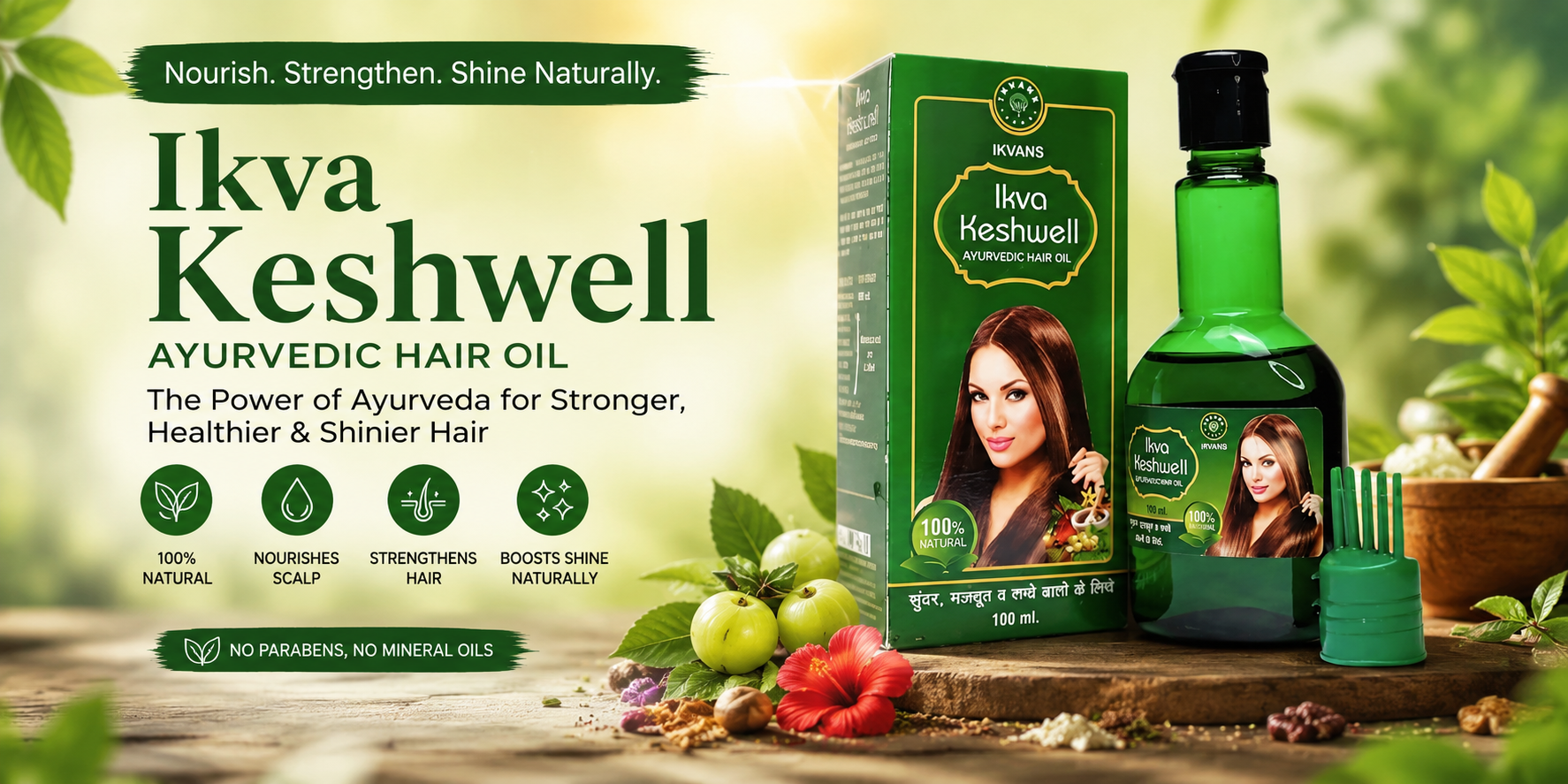
If you want to put this guide into practice rather than just read about it, Ikvans Keshwell Hair Oil is formulated as a herbal blend designed to support scalp nourishment and hair root strength and it's built for exactly the oiling technique covered in Section 5, not as a standin for it. Pair it with the Ikvans Ayurvedic Hair Care Formula for a combined scalpandstrand routine, and browse the rest of the range in Beauty Care.
One honest note: no oil ours included will outperform the fundamentals in this guide. Technique, consistency (8–12 weeks minimum), and ruling out an iron or thyroid issue will do more for your results than switching brands ever will.
11. Frequently Asked Questions
1. How long does Ayurvedic hair oil take to reduce hair fall? Most people notice reduced shedding and improved scalp comfort within 6–8 weeks of consistent, correcttechnique use. Visible new growth typically takes 3–4 months, since a single hair follicle's growth cycle runs several years for the anagen (growth) phase alone new strands simply can't appear faster than the biology allows.
2. Can Ayurvedic hair oil regrow hair on a completely bald patch? No. Herbal oils support scalp and follicle health, but they can't regenerate follicles that have permanently stopped functioning, as can happen with advanced androgenetic alopecia or scarring alopecia. For patchy or sudden bald spots, see a dermatologist rather than waiting to see if oiling helps.
3. Is it safe to leave Ayurvedic hair oil on overnight? Yes, for most hair and scalp types. If you have a very oily scalp or an acneprone hairline, 2–3 hours may be more comfortable, followed by a thorough wash.
4. Which single Ayurvedic herb is best for hair fall? Bhringraj has the most direct research behind it for hair growth specifically (see Section 3), but it's traditionally combined with brahmi (for stresslinked shedding) and amla (for strand strength) rather than used alone the combination targets more than one contributing factor.
5. Can hair oil help with hair fall caused by iron deficiency? Oiling can support scalp health, but it won't correct an underlying iron deficiency that requires dietary changes or supplementation confirmed by a blood test. Given how common iron deficiency is among Indian women (57.2% anaemia prevalence per NFHS5), this is worth ruling out rather than assuming oiling alone will resolve persistent shedding.
6. Does stress really cause hair fall, or is that a myth? It's not a myth it's one of the bestdocumented causes of diffuse hair shedding (telogen effluvium), typically appearing 2–3 months after a stressful event, illness, or major life change, as the hair follicle cycle has a builtin delay before shedding becomes visible.
7. How often should I wash oiled hair? 2–3 times a week works for most hair types. Washing daily after oiling can strip the scalp barrier and reduce the benefit of oiling in the first place.
8. Is Ayurvedic hair oil safe during pregnancy? Most classical herbal hair oil bases are considered safe for external use in pregnancy, but always check the full ingredient list with your doctor first some essential oils included in certain blends are best avoided during pregnancy.
9. Can diet alone fix hair fall without oiling? Diet addresses internal causes (protein, iron, B12), while oiling supports the external scalp environment and circulation. For most people, the two work best together treating one without the other usually gets slower, less complete results.
10. Why does hair fall seem worse during monsoon season? Increased scalp moisture and fungal activity in humid weather can temporarily weaken hair roots and irritate the scalp. Sticking to a consistent 2–3x weekly oiling and washing routine rather than skipping oiling because it's humid usually helps more than it hurts.
11. How can I tell if my hair fall is genetic or stressrelated? Genetic (pattern) hair loss follows a specific pattern a receding hairline or crown thinning and progresses slowly over years. Stressrelated shedding (telogen effluvium) tends to be more sudden, more evenly spread across the scalp, and traceable to a specific trigger 2–3 months earlier, such as illness, major stress, crash dieting, or childbirth.
12. Does ashwagandha in hair oil actually do anything, or is it just marketing? It has real clinical evidence but for stress and cortisol reduction specifically, not as a direct hairgrowth stimulant. Since chronic stress is a recognized trigger for telogen effluvium, ashwagandha's welldocumented cortisollowering effect gives it a legitimate, if indirect, role in a hair fall routine.
12. Conclusion
No article this one included should promise you a miracle in a bottle. What the evidence actually supports is more modest and, honestly, more useful: Ayurvedic herbs like bhringraj and ashwagandha have real research behind them (a rodent study showing accelerated hair growth initiation for one, solid human RCTs on cortisol reduction for the other), correct oiling technique matters as much as the oil itself, and a meaningful share of hair fall in India especially among women traces back to iron deficiency that a blood test, not a bottle, will actually catch.
Start with the technique in Section 5, commit to at least 8 weeks before judging results, rule out iron deficiency if you're a woman with persistent shedding, and treat this as one part of a routine not the whole solution.
CTA
Ready to start? Explore Ikvans Keshwell Hair Oil a herbal blend built for the exact routine outlined in this guide.