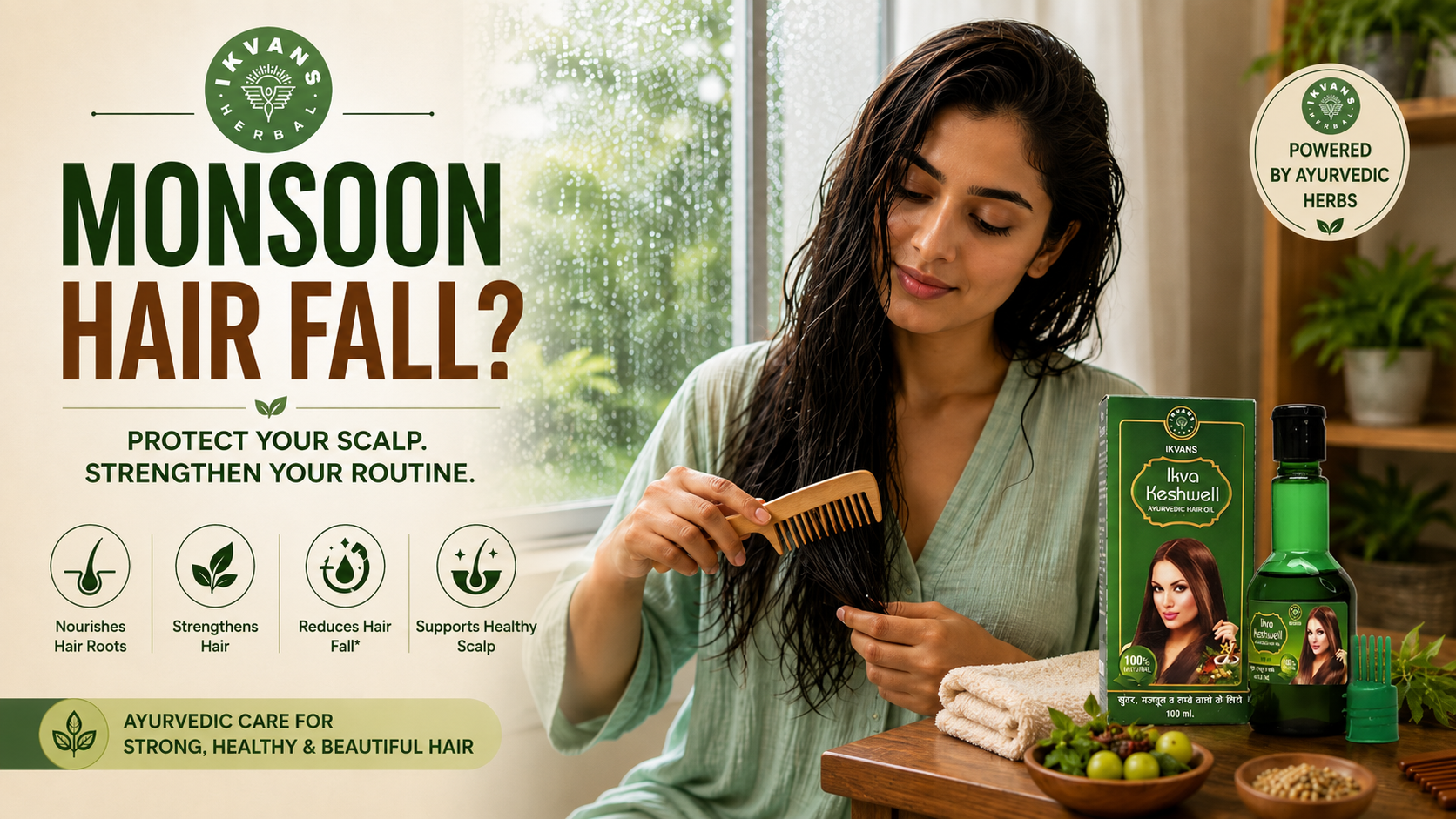
The monsoon brings cooler weather and welcome relief from summer heat, but it can also make hair care more difficult.
During the rainy season, many people notice:
- Increased hair in the shower drain
- More strands on the comb
- An oily or sticky scalp
- Frizz and roughness
- Itching or visible flakes
- Hair breakage while detangling
- A damp scalp that takes longer to dry
It is tempting to blame every fallen strand on the weather. However, increased shedding or breakage may be influenced by several factors, including humidity, scalp buildup, rough handling, stress, illness, nutrition, hormonal changes and underlying hair-loss conditions.
The most practical approach is:
Keep the scalp clean, avoid leaving hair wet for long periods, reduce friction and tight hairstyles, handle damp hair gently and seek professional advice when hair loss is sudden, patchy or persistent.
Hair loss can have many different causes. The American Academy of Dermatology notes that identifying the cause is important because treatment depends on the type of hair loss involved.
Medical disclaimer: This article is for general education and does not replace diagnosis or treatment from a dermatologist. Consult a healthcare professional for sudden, severe, patchy or persistent hair loss.

Is Hair Fall Normal During Monsoon?
Some daily shedding is part of the natural hair-growth cycle. The amount seen on a pillow, comb or bathroom floor can also appear greater after washing or detangling because several loose strands come out together.
The monsoon itself does not explain every case of hair loss. Rainy-season habits may make shedding and breakage more noticeable, including:
- Allowing sweat and oil to remain on the scalp
- Keeping wet hair tied up
- Detangling aggressively
- Washing inconsistently
- Using excessive styling products
- Wearing damp helmets, caps or scarves
- Repeatedly exposing hair to rainwater
- Using hot tools on already dry lengths
A temporary increase in shedding may also occur after fever, major illness, surgery, rapid weight loss or significant stress. The AAD notes that these events can lead to noticeable shedding several weeks or months later.
Why Hair Problems May Feel Worse in the Rainy Season
1. High humidity
Humidity causes hair fibres to absorb moisture from the surrounding air. This may lead to:
- Frizz
- Roughness
- Tangling
- Loss of hairstyle
- Increased friction during brushing
Frizzy hair is not necessarily falling from the root. Some of what appears to be hair fall may actually be breakage along the hair shaft.
2. Sweat and scalp oil
Warm, humid weather may increase scalp sweating.
When sweat mixes with sebum, dust and styling products, the scalp may feel:
- Sticky
- Greasy
- Itchy
- Uncomfortable
- Difficult to keep fresh
This buildup does not automatically cause permanent hair loss, but it can make the scalp uncomfortable and encourage frequent scratching or harsh washing.
3. Keeping the scalp wet
Rainwater, sweat and slow drying can leave the scalp damp for extended periods.
Problems may arise when wet hair is:
- Tied tightly
- Covered immediately
- Rubbed aggressively with a towel
- Left under a wet helmet or scarf
- Slept on before drying
Wet hair is more vulnerable to stretching and breakage during rough handling.
4. Dandruff and scalp flaking
Dandruff causes white or grey flakes to appear on the scalp and hair. It may also cause itching. Several different scalp conditions can resemble ordinary dandruff, including eczema, psoriasis and fungal infection.
Scratching an itchy scalp repeatedly can damage the skin and increase hair breakage.
Persistent redness, pain, thick scaling or patchy hair loss needs professional evaluation.
5. Rough detangling
Hair often becomes more tangled in humid weather.
Pulling a fine comb through wet knots can cause:
- Snapping
- Split ends
- Mechanical breakage
- Tension at the roots
Detangle gently, beginning at the ends and gradually moving upward.
6. Tight hairstyles
Tight ponytails, buns, braids and extensions place repeated tension on the hair.
The AAD warns that hairstyles that constantly pull on the hair can lead to traction alopecia, a type of hair loss caused by prolonged tension.
Choose looser hairstyles, particularly when hair is wet.
7. Frequent shampooing with harsh products
People with oily monsoon scalps may begin shampooing more aggressively.
Washing frequency should depend on scalp oiliness and activity level, but harsh scrubbing and repeated strong cleansing may leave the lengths dry and difficult to manage.
Concentrate shampoo on the scalp rather than aggressively rubbing the full hair length.
8. Stress and poor sleep
Stress and sleep disruption may contribute to changes in hair shedding.
Hair loss may also appear after a stressful event rather than immediately during it, so the trigger is not always obvious.
A hair oil cannot fully correct shedding caused by severe stress, nutritional deficiency, thyroid problems or another medical condition.
Hair Fall or Hair Breakage: How to Tell the Difference
Understanding whether hair is shedding from the root or snapping along its length helps you choose a better routine.
Hair shedding
Shedding often involves full-length strands. You may notice:
- Long strands on the pillow or floor
- Hair released during shampooing
- Increased shedding from across the scalp
- A small bulb-like end on some strands
Hair breakage
Breakage involves snapped sections. You may notice:
- Shorter pieces of different lengths
- Increased frizz
- Split ends
- Rough or brittle hair
- Hair snapping while combing
- Uneven-looking lengths
A person can experience both shedding and breakage simultaneously.
A Practical Monsoon Hair-Care Routine
Step 1: Clean the scalp regularly
There is no ideal shampoo schedule for everyone.
Wash based on:
- Scalp oiliness
- Sweating
- Exercise
- Product buildup
- Helmet use
- Dandruff
- Hair texture
An oily scalp may need more frequent cleansing than a dry or curly scalp.
Use the fingertips rather than scratching with the nails.
Step 2: Dry the scalp properly
After washing or being caught in the rain:
- Gently squeeze out excess water
- Use a soft cotton towel or microfibre towel
- Press rather than rub
- Allow airflow around the scalp
- Avoid tying wet hair tightly
- Avoid sleeping with a wet scalp
Use a hair dryer on a comfortable low or moderate setting when natural drying takes too long.
Step 3: Condition the lengths
Apply conditioner primarily to the mid-lengths and ends unless the product specifically instructs otherwise.
Conditioner may help:
- Reduce friction
- Improve detangling
- Make hair feel smoother
- Reduce mechanical breakage
- Improve manageability
Conditioner does not treat the medical causes of hair loss, but it can help protect fragile lengths.
Step 4: Detangle gently
Use a wide-tooth comb or suitable detangling brush.
Start from the ends and gradually move upwards.
Avoid forcefully pulling through knots, especially when hair is soaking wet.
Step 5: Use a pre-wash oiling routine
Hair oil may be used as a pre-wash treatment to support scalp massage and reduce dryness or friction.
A simple routine:
- Divide the hair into sections
- Apply a moderate quantity to the scalp
- Massage gently with the fingertips
- Apply a small quantity to dry lengths if needed
- Leave it on for the label-recommended duration
- Shampoo thoroughly
Avoid excessive oil that requires repeated harsh washing to remove.
Step 6: Wash combs and pillowcases
Hair-care tools can collect:
- Oil
- Flakes
- Dust
- Product residue
- Loose hair
Clean combs and brushes regularly and change pillowcases frequently, especially when the scalp is oily.
Do not share combs or towels when a scalp infection is suspected.
Step 7: Avoid unnecessary heat styling
Repeated high-temperature styling can increase dryness and breakage.
During humid weather:
- Reduce flat-ironing frequency
- Use moderate dryer heat
- Avoid repeatedly straightening frizzy hair
- Use heat protection where appropriate
- Allow rest days between styling sessions
Should You Apply Hair Oil During Monsoon?
Yes, hair oil can remain part of a monsoon routine, but the method matters.
You may prefer:
- A smaller quantity than during winter
- Shorter pre-wash application
- Gentle scalp massage
- Thorough shampooing afterward
- Less oil on an already greasy scalp
Avoid leaving a heavy layer of oil mixed with sweat and buildup for several days.
Oil should not be treated as a cure for:
- Genetic pattern hair loss
- Alopecia areata
- Thyroid-related shedding
- Iron deficiency
- Scalp infection
- Hormonal hair loss
The AAD emphasises that effective treatment begins with identifying the cause of hair loss. A dermatologist may recommend blood tests or scalp evaluation when a deficiency, hormonal issue, infection or disease is suspected.
How to Apply Hair Oil Correctly
1. Use a moderate amount
The scalp does not need to be soaked.
Excess oil may require repeated shampooing, which can leave the hair lengths dry.
2. Massage gently
Use the pads of the fingers.
Avoid:
- Scratching with nails
- Pulling the hair
- Vigorous rubbing
- Applying painful pressure
3. Avoid tight hairstyles after oiling
Oiled hair can feel smoother and may slip, encouraging people to tie it tightly. Keep the hairstyle loose.
4. Follow the product directions
Do not assume that every oil should be left overnight.
Follow the individual label.
5. Stop if irritation occurs
Discontinue use when the product causes:
- Burning
- Rash
- Severe itching
- Swelling
- Increased redness
What Is Ikvans Keshwell Hair Oil?
Ikvans Keshwell Hair Oil is an Ayurvedic hair-care formulation designed to support scalp nourishment, hair-root strength and a healthier-looking hair-care routine. Ikvans currently sells it as a two-bottle pack and positions it for hair nourishment and hair-strength support.
It should be described as hair and scalp wellness support, not as a guaranteed treatment for baldness or every form of hair loss.
Suggested responsible positioning
Ikvans Keshwell Hair Oil may complement a routine focused on:
- Scalp massage
- Pre-wash nourishment
- Dryness management
- Stronger-feeling hair
- Reduced friction during grooming
- Consistent Ayurvedic hair care
How to Use Ikvans Keshwell Hair Oil
Follow the exact directions on the packaging.
A general pre-wash routine may include:
- Part the hair into sections
- Apply the label-recommended quantity
- Massage gently into the scalp
- Spread a small amount over dry lengths
- Leave it on for the instructed duration
- Cleanse with a suitable shampoo
- Use consistently without exceeding directions
Do not apply it over broken, infected or severely irritated skin.
Nutrition and Hair Wellness
Hair health is influenced by overall health and nutrition.
Include a balanced diet containing:
- Protein-rich foods
- Lentils and beans
- Eggs, dairy or suitable alternatives
- Fruits
- Vegetables
- Nuts and seeds
- Whole grains
- Adequate iron-containing foods
Hair loss can sometimes be associated with illness, nutritional deficiency, hormonal changes, medication or significant stress.
Avoid taking high dose hair supplements without professional advice. Excessive supplementation is not automatically beneficial and may delay identification of the real cause.
When Should You See a Dermatologist?
Seek professional advice when you notice:
- Sudden heavy shedding
- Circular or patchy bald areas
- A visibly widening hair part
- Receding hairline
- Scalp pain or burning
- Thick scaling or crusting
- Pus or signs of infection
- Broken hairs in localised patches
- Eyebrow or eyelash loss
- Hair loss continuing for several months
A dermatologist can assess the pattern, scalp condition and possible underlying causes.
Common Monsoon Hair-Care Mistakes
Keeping wet hair tied up
This increases tangling, tension and slow drying.
Scrubbing with a rough towel
Rough rubbing can worsen breakage and frizz.
Applying too much oil
Heavy oil mixed with sweat and buildup may make cleansing difficult.
Ignoring dandruff
Persistent itching and flaking may require targeted treatment.
Wearing tight hairstyles daily
Repeated pulling can damage hair and contribute to traction-related loss.
Depending only on hair oil
Oil cannot correct all nutritional, hormonal, genetic or medical causes.
Changing products every few days
Frequent product switching makes it difficult to identify what is helping or irritating the scalp.
Frequently Asked Questions
1. Is monsoon hair fall normal?
Some increased shedding or breakage may become noticeable during humid weather, but persistent or severe hair loss should not be assumed to be seasonal.
2. Should I wash my hair after getting wet in the rain?
Rinse and cleanse the scalp when it feels dirty, sticky or exposed to polluted rainwater. Dry the scalp properly afterward.
3. Can I oil my hair during monsoon?
Yes. Use a moderate quantity as a pre-wash treatment and avoid keeping a heavy oil layer on a sweaty scalp for long periods.
4. How often should I wash oily hair during monsoon?
Wash according to scalp oiliness, sweating and buildup. There is no single schedule suitable for every hair type.
5. Does dandruff cause hair fall?
Dandruff commonly causes flakes and itching. Repeated scratching and scalp inflammation may increase breakage, but persistent hair loss requires proper evaluation.
6. Can hair oil regrow lost hair?
Hair oil should not be promised as a regrowth treatment for every condition. The correct approach depends on the underlying cause.
7. Should I comb wet hair?
Wet hair needs gentle handling. Use a wide-tooth comb and detangle from the ends instead of pulling from the roots.
8. Can stress increase hair shedding?
Significant physical or emotional stress may contribute to temporary shedding in some people.
9. Can tight ponytails cause hair loss?
Repeatedly tight hairstyles can cause traction alopecia by placing continuous tension on the follicles.
10. When should I see a dermatologist?
Seek advice for sudden, patchy, severe, painful or persistent hair loss or when the scalp develops redness, scaling or infection.
Conclusion
Monsoon hair problems are often connected with humidity, scalp oil, wet hair, tangling, dandruff and rough grooming.
A reliable rainy-season routine should focus on:
- Keeping the scalp clean
- Drying wet hair properly
- Conditioning the lengths
- Detangling gently
- Avoiding tight hairstyles
- Using moderate pre-wash oil
- Seeking medical advice when hair loss persists
Ikvans Keshwell Hair Oil may complement this routine by supporting scalp massage and Ayurvedic hair nourishment. However, it should not replace diagnosis or treatment for medical hair-loss conditions.