Introduction: The Skincare Wisdom Your Nani Always Had
Long before skincare became a billion-dollar global industry, Indian women had access to the most effective skin formulas on the planet — and they were right in their kitchens. Haldi at the wedding ceremony. Chandan at the temple. Aloe from the backyard garden.
These were not just cultural rituals. They were science — later validated by thousands of research papers on the remarkable therapeutic properties of turmeric and sandalwood.
Today, as Indian consumers become increasingly aware of the hidden harms of synthetic cosmetics — parabens, sulfates, microplastics — Ayurvedic skincare is experiencing a powerful renaissance.
In this guide, we explore the dermatological science behind Haldi and Chandan, how to build an effective Ayurvedic skin routine, and why the right formulation matters enormously.
The Science of Haldi (Turmeric) for Skin
What Makes Turmeric a Skincare Superstar
The active compound in turmeric — curcumin — is one of the most potent anti-inflammatory and antioxidant molecules found in nature. For skin, this translates to four key benefits:
• Anti-inflammatory: Reduces redness, swelling, and the inflammatory cascade that drives acne
• Antioxidant: Neutralises free radicals from UV exposure and pollution that cause premature aging
• Antimicrobial: Inhibits Propionibacterium acnes — the bacteria responsible for inflammatory acne
• Skin brightening: Inhibits tyrosinase activity — the enzyme that produces melanin — reducing hyperpigmentation and uneven skin tone
Research-Backed Benefits of Turmeric on Skin
A study in the journal Phytotherapy Research found that topical turmeric formulations significantly improved skin moisture, sebum content, and skin tone over eight weeks. Another study in the Journal of Drugs in Dermatology found curcumin-based formulations reduced psoriasis symptoms and inflammatory skin conditions.
For Indian skin specifically — which is prone to post-inflammatory hyperpigmentation (dark spots after acne) — turmeric's melanin-inhibiting action is particularly valuable.
The Science of Chandan (Sandalwood) for Skin
What Makes Sandalwood a Skin Healer
Sandalwood (Santalum album) essential oil has been used in Ayurvedic skincare formulations for over 4,000 years. Modern dermatology has now confirmed what ancient practitioners observed:
• Anti-inflammatory: Alpha-santalol activates olfactory receptors in the skin that reduce inflammation
• Astringent properties: Tighten pores and reduce excess sebum production
• Soothing: Calms irritated, sensitised skin — particularly effective for eczema and contact dermatitis
• Anti-aging: Stimulates collagen synthesis and reduces the appearance of fine lines
• Natural fragrance: A gentle, non-irritating scent unlike synthetic fragrances that disrupt the skin microbiome
Why Sandalwood Is Particularly Effective for Oily and Acne-Prone Skin
One of sandalwood's most underappreciated properties is its ability to regulate sebum production. Excessive sebum is the primary driver of acne — it clogs pores and creates an anaerobic environment where acne bacteria thrive. Sandalwood's astringent compounds reduce oil production without over-drying the skin — a balance that most synthetic toners and astringents fail to achieve.
The Haldi-Chandan Combination: Why These Two Work Better Together
Individually, both Haldi and Chandan are remarkable skin actives. Together, they create a synergistic effect that addresses the full spectrum of common Indian skin concerns:
• Acne: Turmeric's antibacterial + Sandalwood's sebum regulation = comprehensive acne management
• Hyperpigmentation: Turmeric's melanin inhibition + Sandalwood's brightening = even skin tone
• Aging: Turmeric's antioxidants + Sandalwood's collagen stimulation = youthful skin
• Sensitive skin: Turmeric's anti-inflammatory + Sandalwood's calming = soothed, balanced skin
In classical Ayurveda, this combination was used in Ubtan — a traditional face and body paste — for brides to achieve luminous skin before their wedding. The tradition survives because it works.
Building Your Ayurvedic Skin Routine: Morning and Evening
Morning Routine
• Cleanse with Haldi-Chandan face wash — removes overnight sebum without stripping skin barrier
• Apply Aloe Vera gel as a lightweight moisturiser — soothes and hydrates
• Sunscreen (SPF 30+) — non-negotiable for Indian skin prone to hyperpigmentation
• Keep makeup minimal — let skin breathe
Evening Routine
• Double cleanse: oil cleanser first, then Haldi-Chandan face wash
• Apply Ayurvedic Anti-Aging Cream or Anti-Acne Cream depending on skin concern
• Weekly Haldi-Chandan face mask: 1 tsp turmeric + 1 tsp sandalwood powder + rose water paste — apply for 15 minutes
Common Skin Problems Addressed by This Combination
For Acne-Prone Skin
Both Haldi and Chandan address acne at the source — bacterial overgrowth and excess sebum. Unlike benzoyl peroxide or salicylic acid, which can cause severe dryness and sensitivity, this Ayurvedic combination reduces acne without disrupting the skin's protective barrier.
Ikvanscare's Ayurvedic Anti-Acne Cream (Rs. 299 for a pack of 2) combines these actives in a bioavailable, gentle formulation that is effective even on sensitive skin.
For Hyperpigmentation and Uneven Skin Tone
Dark spots, sun tan, and post-acne marks are among the most common skin concerns for Indian women. Turmeric's tyrosinase inhibition works gradually but reliably to lighten hyperpigmentation — and unlike hydroquinone (a common depigmentation chemical), it does not carry cancer risk or rebound pigmentation.
For Aging and Fine Lines
Environmental aging — driven by UV radiation and pollution — is the number one cause of premature skin aging in India. Ikvanscare's Ayurvedic Anti-Aging Cream (Rs. 299 for a pack of 2) harnesses the antioxidant power of turmeric and the collagen-stimulating properties of sandalwood to slow and visibly reverse skin aging signs.
A Note on Formulation Quality
Not all Haldi-Chandan products are equal. Many mass-market products use synthetic turmeric dyes (which stain skin yellow without therapeutic benefit) or artificial sandalwood fragrance (which has no dermatological action).
Effective formulations use curcumin-standardised turmeric extract and authentic Santalum album oil — the only forms that deliver genuine therapeutic benefit. Ikvanscare's formulations are built on this principle: genuine ingredients at therapeutic concentrations.
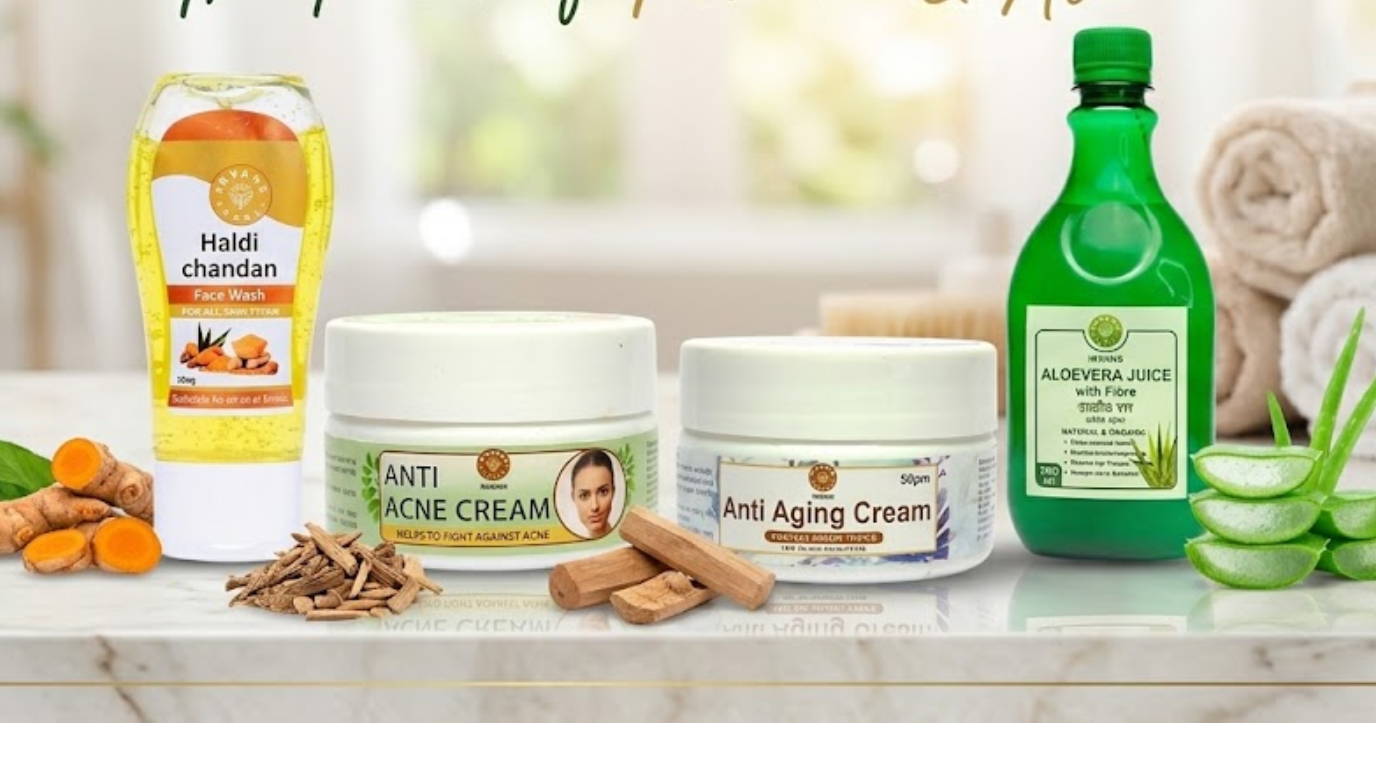
Ikvanscare's Ayurvedic Beauty Range
• Haldi-Chandan Face Wash
• Ayurvedic Anti-Acne Cream
• Ayurvedic Anti-Aging Cream
• Aloe Vera Ayurvedic Juice


Shop the Beauty Care Collection at ikvanscare.com/collections/
Frequently Asked Questions
Q: Will Haldi stain my face yellow?
A: Raw turmeric paste can leave a temporary yellow tint. Properly formulated skincare products use curcumin extracts that are effective without causing staining. Ikvanscare's face wash is formulated to clean and treat without any yellow residue.
Q: Can I use Haldi-Chandan face wash daily?
A: Yes, it is gentle enough for twice-daily use on most skin types. If you have very dry skin, using it once a day in the evening and a gentle cream cleanser in the morning is ideal.
Q: How long does it take to see results from an Ayurvedic skincare routine?
A: Skin typically takes 28 days to complete a full cell turnover cycle. Most people notice improvements in skin texture and brightness within 4 weeks, and more significant changes in acne and pigmentation within 8-12 weeks.
Q: Is Ayurvedic skincare safe for all skin types?
A: Ayurvedic formulations are generally very well tolerated by all skin types. However, those with active eczema or extremely sensitive skin should do a patch test before full application and consult a dermatologist if in doubt.
Q: Can men use the Haldi-Chandan face wash?
A: Absolutely. Skin health has no gender. Haldi and Chandan are equally effective for men's skin — particularly for post-shave irritation, oiliness, and pollution-related dullness.