Daily Detox Routine: Healthy Habits, Common Myths and Ayurvedic Support
Detox drinks, cleansing diets and herbal syrups are widely promoted as ways to remove toxins, improve digestion and help the body feel lighter.
However, the word “detox” is often used without clearly explaining:
- Which toxins are being discussed
- How they are supposed to leave the body
- How quickly the process should occur
- Whether the claim has been scientifically tested
The human body already has natural systems that process and remove waste. The liver, kidneys, lungs and digestive tract perform these functions continuously.
A realistic daily detox routine should therefore focus on supporting normal digestion, hydration, regular bowel movements, sleep and balanced nutrition rather than trying to force the body through extreme cleanses.
The practical answer is:
You do not need a severe detox diet. A balanced routine involving water, fibre-rich food, regular movement, sufficient sleep and responsible use of wellness products is a safer and more sustainable approach.
Medical disclaimer: This article is for general education and does not replace medical advice, diagnosis or treatment. Consult a qualified healthcare professional before using a detox or herbal product, especially if you take medication or have a liver, kidney, digestive or metabolic condition.
What Does Detox Mean?
In medical settings, detoxification may refer to the management of harmful substances such as alcohol, drugs or poisons under professional supervision.
In the wellness industry, “detox” is often used more broadly to describe:
- Supporting digestion
- Improving bowel regularity
- Reducing bloating
- Drinking more water
- Eating lighter meals
- Avoiding highly processed food
- Supporting general internal wellness
These meanings should not be confused.
A wellness drink cannot be assumed to remove unspecified toxins from every part of the body.
The National Center for Complementary and Integrative Health reports that there is no compelling research showing that commercial detox diets eliminate toxins or provide lasting weight-management benefits.
How Does the Body Naturally Remove Waste?
The body has several organs and systems that work together.
1. The liver
The liver processes nutrients, medicines, alcohol and substances absorbed from the digestive tract. It converts or breaks down many compounds so they can be used or removed by the body.
A supplement should not be presented as a replacement for normal liver function or treatment for liver disease.
2. The kidneys
The kidneys filter blood and remove waste products and excess water through urine. They also help maintain appropriate levels of minerals, salts and fluids in the blood.
3. The digestive system
The digestive tract processes food, absorbs nutrients and eliminates material the body does not need through bowel movements.
4. The lungs
The lungs remove carbon dioxide when you breathe out.
5. The skin
The skin helps regulate temperature through sweating. However, sweating should not be described as the body’s main method of removing all toxins.
Together, these systems operate every day without requiring a juice cleanse or starvation diet.
What Is a Healthy Daily Detox Routine?
A healthy detox routine is better understood as a collection of habits that support the body’s normal functions.
It may include:
- Drinking enough water
- Eating fibre-rich foods
- Maintaining regular meals
- Reducing excessive alcohol
- Limiting highly processed food
- Remaining physically active
- Getting adequate sleep
- Managing stress
- Avoiding unnecessary supplement combinations
- Following medical advice for existing conditions
These habits are less dramatic than a three-day detox challenge, but they are more realistic and sustainable.
Start the Day With Hydration
Water supports circulation, digestion, temperature regulation and kidney function.
You do not need to drink several litres immediately after waking. Instead, consume water regularly throughout the day.
A simple routine may be:
- One glass after waking
- Water with or between meals
- Additional fluids around physical activity
- More attention to hydration during hot weather
Your needs may vary according to:
- Climate
- Body size
- Exercise
- Pregnancy
- Illness
- Kidney or heart conditions
- Medications
People who have been advised to restrict fluids should follow their healthcare professional’s instructions.
Eat More Fibre-Rich Foods
Fibre supports bowel regularity and digestive health.
Useful sources include:
- Whole grains
- Oats
- Brown rice
- Beans
- Lentils
- Fruits
- Vegetables
- Nuts
- Seeds
The NHS notes that a fibre-rich diet can support digestion and help prevent constipation.
Increase fibre gradually. A sudden large increase may cause gas or bloating, particularly when water intake remains low.
Reduce Highly Processed Foods
A sustainable wellness routine does not require complete food restriction.
However, frequently consuming foods high in salt, added sugar and saturated fat may make it harder to maintain balanced nutrition.
Try replacing some highly processed options with:
- Home-cooked meals
- Fresh fruits
- Cooked vegetables
- Whole grains
- Dals and beans
- Plain nuts
- Lean proteins
- Unsweetened drinks
The goal is not perfection. It is building a pattern you can maintain.
Support Regular Bowel Movements
Constipation is sometimes described as a sign that “toxins are building up,” but that language can create unnecessary fear.
Constipation may be influenced by:
- Insufficient fibre
- Low fluid intake
- Limited activity
- Ignoring the urge to pass stool
- Medicines
- Travel
- Stress
- Hormonal or medical conditions
Helpful daily habits may include:
- Eating fibre-rich foods
- Drinking adequate fluids
- Walking regularly
- Maintaining consistent meal times
- Allowing enough time for the toilet
- Seeking advice when symptoms persist
Do not depend indefinitely on strong laxative cleanses.
Move Your Body Regularly
Regular movement supports overall health and may also support comfortable digestion.
Options include:
- Walking
- Yoga
- Strength training
- Cycling
- Swimming
- Mobility exercises
- Household activity
You do not need to perform excessive workouts to “sweat out toxins.”
Physical activity should be viewed as support for circulation, strength, metabolism, cardiovascular health and emotional well-being.
Prioritise Sleep
Poor sleep may affect appetite, energy, stress and food choices.
Create a more consistent sleep routine by:
- Sleeping and waking at similar times
- Limiting heavy meals close to bedtime
- Reducing late-night caffeine
- Keeping the bedroom dark and comfortable
- Reducing screen use before sleep
- Seeking medical advice for persistent insomnia or loud snoring
No detox drink can fully compensate for chronic sleep deprivation.
Reduce Excessive Alcohol
The liver processes alcohol, and frequent excessive intake can damage health.
Taking a detox syrup after drinking does not cancel the effects of alcohol.
A healthier strategy is to:
- Reduce the frequency and quantity
- Avoid binge drinking
- Eat appropriately
- Remain hydrated
- Seek professional help when reducing alcohol is difficult
Do not combine herbal products and alcohol without checking whether the combination is appropriate.
Manage Stress
Stress can influence eating patterns, sleep, bowel habits and digestive discomfort.
Simple stress-management practices include:
- Slow breathing
- Meditation
- Gentle yoga
- Time outdoors
- Regular exercise
- Reducing continuous screen exposure
- Talking to supportive people
- Seeking professional mental-health support when needed
Stress management should be considered part of digestive wellness rather than an optional extra.
Do Detox Diets Work?
Detox diets may involve:
- Juice-only plans
- Fasting
- Very low-calorie meals
- Laxative teas
- Colon cleansing
- Multiple supplements
- Elimination of entire food groups
Some people initially feel lighter because they are eating less food, consuming fewer calories or losing water.
This does not prove that toxins have been removed.
NCCIH reports that detox and juice diets may produce short-term weight loss because of reduced calorie intake, but weight commonly returns after normal eating resumes. Long-term effects of detox programmes have not been adequately studied.
Possible Risks of Extreme Cleanses
Depending on the method, extreme detox routines may cause:
- Dehydration
- Weakness
- Dizziness
- Diarrhoea
- Abdominal cramps
- Low blood sugar
- Electrolyte imbalance
- Inadequate protein intake
- Nutrient deficiencies
- Medicine interactions
Juices that have not been properly prepared or pasteurised may also create food-safety risks.
People with diabetes, kidney disease, liver disease, eating disorders or other medical conditions may face additional risks.
Does Detox Help With Weight Loss?
A detox product should not be marketed as a guaranteed weight-loss solution.
Short-term changes on the weighing scale may reflect:
- Reduced calorie intake
- Lower food volume
- Water loss
- Changes in bowel contents
Sustainable weight management depends on:
- Overall calorie balance
- Food quality
- Portion size
- Physical activity
- Sleep
- Stress
- Hormones and medical conditions
- Long-term behaviour
Healthy eating and consistent activity are more reliable strategies than quick-fix detox programmes.
Does Detox Improve Skin?
Skin appearance may be influenced by:
- Hydration
- Nutrition
- Sleep
- Hormones
- Sun exposure
- Skincare
- Smoking
- Alcohol
- Medical skin conditions
A balanced wellness routine may support healthy-looking skin indirectly. However, a detox syrup should not promise to cure acne, remove pigmentation or produce guaranteed glowing skin.
Persistent acne, rashes or sudden skin changes should be evaluated appropriately.
Can Detox Reduce Bloating?
Temporary bloating may be connected with:
- Large meals
- Eating quickly
- Carbonated drinks
- Constipation
- Certain carbohydrates
- Food intolerances
- Menstrual changes
- Digestive conditions
Reducing portion size, eating more slowly and identifying personal food triggers may help.
Persistent bloating accompanied by pain, vomiting, bleeding, weight loss or major bowel changes should be discussed with a doctor.
Do Herbal Detox Products Clean the Liver?
A herbal product should not be described as washing, repairing or completely cleansing the liver.
Evidence for many herbs marketed for liver cleansing remains limited. For example, NCCIH states that available evidence is insufficient to reach firm conclusions about the effects of milk thistle on human health conditions.
People with abnormal liver tests, jaundice or suspected liver disease need medical assessment rather than self-treatment with detox products.
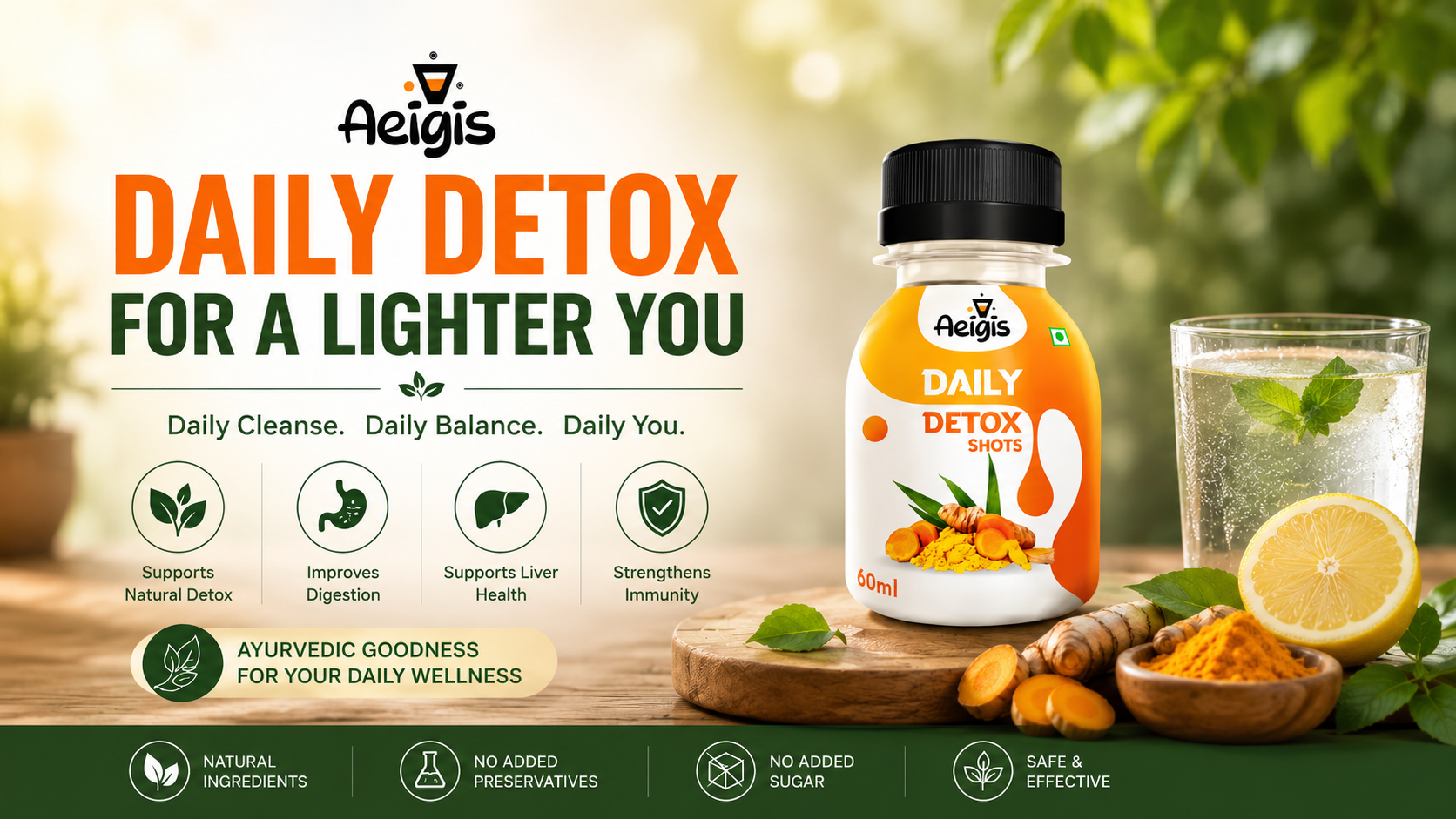
What Is Ikvans Aegis Daily Detox Syrup?
Ikvans Aegis Daily Detox Syrup is an Ayurvedic formulation designed to support digestive wellness, internal balance and the body’s natural cleansing processes as part of a healthy lifestyle.
The Ikvans product page positions it as support for:
- Digestive health
- Gut comfort
- Internal wellness
- Regular cleansing routines
- General balance
It should be described as daily wellness support, not as a cure or a product that forcibly removes every toxin from the body.
How to Use Aegis Daily Detox Syrup
Follow the exact serving and timing printed on the product packaging.
Before use:
- Read the full ingredient list
- Confirm the recommended serving
- Shake the bottle if instructed
- Use the supplied measuring cap
- Do not exceed the label directions
- Check whether refrigeration is required
- Review other medicines and supplements
- Stop using it if an unexpected reaction occurs
The exact verified serving instructions should also be displayed clearly on the Ikvans product page.
Who Should Seek Professional Advice Before Use?
Speak with a qualified healthcare professional before using a detox or herbal syrup when you:
- Are pregnant or breastfeeding
- Are under 18
- Use prescription medicines
- Have diabetes
- Have kidney disease
- Have liver disease
- Have a digestive disorder
- Are preparing for surgery
- Frequently experience diarrhoea
- Use several herbal supplements
- Have a known ingredient allergy
“Natural” does not guarantee that a product is suitable for every person.
Warning Signs That Need Medical Attention
Do not manage serious symptoms only with a detox product.
Seek medical advice when you experience:
- Persistent abdominal pain
- Repeated vomiting
- Blood in vomit or stool
- Black stools
- Yellowing of the skin or eyes
- Dark urine
- Unexplained weight loss
- Severe weakness
- Persistent diarrhoea
- Swelling in the legs or abdomen
- Major changes in urination
These symptoms may indicate a condition requiring diagnosis and treatment.
Common Detox Myths
Myth 1: You must detox after eating unhealthy food
Reality: One heavy meal does not require an extreme cleanse. Return to balanced meals, water and regular movement.
Myth 2: More bowel movements mean more toxins are leaving
Reality: Frequent loose stools may represent irritation or a laxative effect and can cause dehydration.
Myth 3: Sweating removes all toxins
Reality: Sweating primarily helps regulate body temperature. The kidneys, liver and digestive system play larger roles in processing waste.
Myth 4: Detox products burn belly fat
Reality: No detox syrup can selectively remove abdominal fat.
Myth 5: Juice cleanses provide complete nutrition
Reality: Juice-only plans may lack adequate protein, fibre and other nutrients.
Myth 6: Natural detox products have no side effects
Reality: Herbal ingredients may cause allergic reactions, digestive discomfort or medicine interactions.
Myth 7: A detox product can reverse liver damage
Reality: Liver disease requires appropriate medical evaluation and treatment.
A Simple Seven-Step Daily Wellness Routine
A practical routine may look like this:
Morning
- Drink water after waking
- Eat a balanced breakfast
- Follow product-label directions where applicable
During the day
- Include vegetables and whole foods
- Drink water regularly
- Move instead of remaining seated continuously
- Avoid relying on excessive caffeine
Evening
- Choose a moderate dinner
- Avoid unnecessary late-night snacking
- Take a gentle walk
- Prepare for consistent sleep
The routine should be simple enough to continue for months, not only for a weekend.
Support Your Daily Digestive Wellness
Explore Ikvans Aegis Daily Detox Syrup, an Ayurvedic formulation created to complement a balanced routine focused on digestion, internal wellness and healthy daily habits.
Frequently Asked Questions
1. Does the body need a daily detox?
The body already processes and removes waste through organs such as the liver and kidneys. Healthy habits can support these systems, but extreme detox programmes are unnecessary for most people.
2. What is the safest way to detox naturally?
Focus on adequate water, fibre-rich food, exercise, sleep, moderate portions and limited alcohol rather than fasting or laxative cleanses.
3. Can detox syrup be consumed every day?
Follow the specific product label. Extended use should be discussed with a healthcare professional when you have a medical condition or take medication.
4. Does detox syrup help with weight loss?
It should not be treated as a weight-loss product. Sustainable weight management depends on food intake, physical activity and long-term habits.
5. Can detox products clean the liver?
They should not be described as physically cleaning or repairing the liver. The liver performs its own metabolic functions, and liver disease requires medical care.
6. Does diarrhoea mean a detox is working?
No. Diarrhoea may indicate irritation or a laxative effect and can lead to dehydration or electrolyte imbalance.
7. Can a detox routine reduce bloating?
Balanced meals, slower eating, hydration and bowel regularity may help occasional bloating. Persistent symptoms need evaluation.
8. Is a juice cleanse better than eating whole fruit?
Whole fruits generally provide more fibre than strained juice. Juice-only diets may also lack protein and sufficient calories.
9. Who should avoid detox products?
People who are pregnant, breastfeeding, taking medicine or managing liver, kidney, digestive or metabolic conditions should seek professional advice first.
10. When should I stop using a detox syrup?
Stop and seek advice if you experience persistent diarrhoea, severe pain, vomiting, rash, swelling, dizziness or another unexpected reaction.
Conclusion
A healthy daily detox routine does not require starvation, juice-only diets or aggressive laxatives.
Your body already has organs that process and remove waste. The best way to support them is through regular hydration, balanced nutrition, fibre, movement, sleep and responsible lifestyle choices.
Ikvans Aegis Daily Detox Syrup may complement this type of routine when used according to the product label. It should not replace healthy habits, medical treatment or professional evaluation of persistent symptoms.