Best Time to Drink Aloe Vera Juice: Morning or Night?
Aloe vera juice has become a popular addition to daily wellness routines, especially among people interested in digestion, hydration, skin health and Ayurvedic living.
However, many first-time users have the same questions:
- Should aloe vera juice be taken in the morning or at night?
- Is it better on an empty stomach?
- Should it be diluted with water?
- Can aloe vera juice be consumed every day?
- How much should a person drink?
The most practical answer is:
Aloe vera juice can generally be taken at the time recommended on the product label. Morning use is often more convenient for building a consistent routine, but there is no strong scientific evidence proving that morning is universally better than night.
The suitability of aloe vera juice depends on the exact product formulation, serving instructions, the user’s health, medications and digestive tolerance.
Medical disclaimer: This article is intended for general education and does not replace medical advice, diagnosis or treatment. Consult a qualified healthcare professional before consuming aloe vera juice if you use regular medication, have a medical condition, or are pregnant or breastfeeding.
What Is Aloe Vera Juice?
Aloe vera is a succulent plant containing a clear inner gel and a yellowish substance known as latex beneath the leaf’s outer skin.
Commercial aloe vera drinks may be made from:
- Inner-leaf aloe gel
- Decolorized whole-leaf extract
- Aloe juice concentrate
- A blended herbal formulation containing aloe vera
These are not necessarily identical products.
The aloe latex portion contains compounds known as anthraquinones, including aloin, which can have a strong laxative effect. Oral aloe latex may cause abdominal pain, cramps and diarrhoea. Product processing and ingredient transparency are therefore important when selecting a drink intended for oral use.
Consumers should choose a commercially prepared product specifically labelled for drinking rather than making a drink from an unprocessed aloe leaf without understanding which parts need to be removed.
What Is the Best Time to Drink Aloe Vera Juice?
There is no clinically established “perfect time” that works for every person.
The best time is generally the time that:
- Follows the product directions
- Suits your digestive tolerance
- Does not interfere with medicines
- Helps you follow the routine consistently
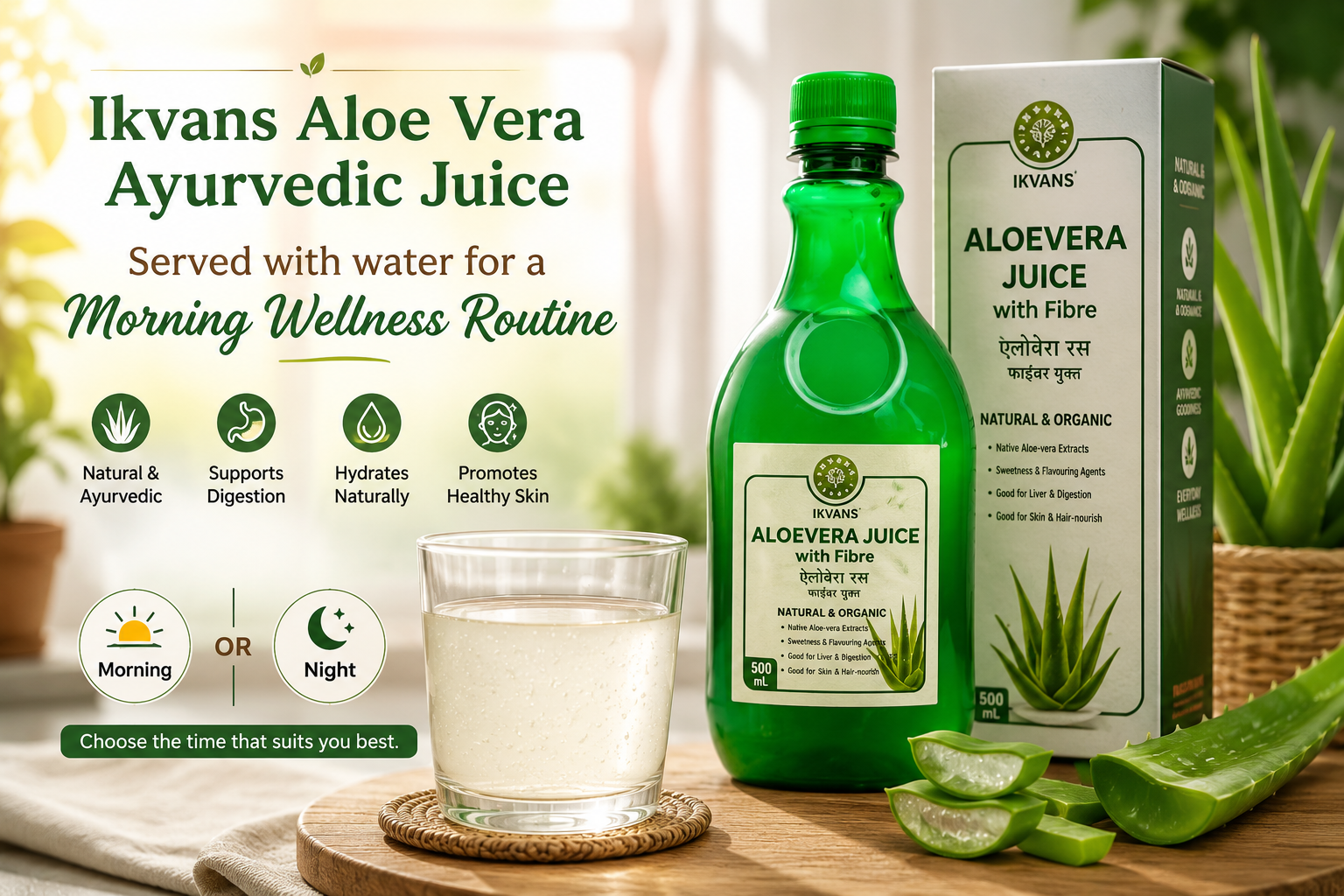
Ikvans currently recommends taking its Aloe Vera Ayurvedic Juice with water, preferably on an empty stomach, or as advised by a healthcare professional. The product page does not display a precise quantity, so customers should confirm the recommended serving on the bottle label before use.
Drinking Aloe Vera Juice in the Morning
Morning is the most common choice for people building an Ayurvedic wellness routine.
It may be convenient because:
- It is easier to remember as part of a morning habit
- It can be taken before breakfast when the label recommends empty-stomach use
- It can be diluted and consumed with the first glass of water
- It avoids forgetting the serving later in the day
However, taking aloe vera juice in the morning does not automatically make it more effective.
The benefits of a wellness product depend more on its composition, serving, regularity and suitability than on claims that a particular hour dramatically improves absorption.
A simple morning routine
When permitted by the product label:
- Shake the bottle properly
- Measure the recommended quantity
- Dilute it in water if instructed
- Drink it before breakfast or at the labelled time
- Close and store the bottle correctly
Do not estimate the quantity using a household spoon when the packaging provides a measuring cap.
Can Aloe Vera Juice Be Taken at Night?
Aloe vera juice can sometimes be taken in the evening when this is permitted by the manufacturer and it suits the user’s digestion.
Evening use may be convenient for people who:
- Forget supplements during busy mornings
- Prefer taking herbal products after completing their meals
- Experience discomfort when consuming drinks before breakfast
- Follow a healthcare professional’s specific schedule
However, avoid consuming a large amount immediately before sleeping, especially if the product increases bowel movement, causes stomach discomfort or requires additional water.
There is no reliable evidence that nighttime consumption provides superior detoxification or skin benefits.
Morning or Night: Which Is Better?
For most healthy adults considering a properly formulated drink, the choice is mainly about comfort and consistency.
| Factor |
Morning |
Night |
| Routine consistency |
Often easier |
Suitable for evening routines |
| Empty-stomach use |
Convenient before breakfast |
Possible before dinner if instructed |
| Digestive observation |
Easier to monitor during the day |
Discomfort may disturb sleep |
| Hydration routine |
Easy to combine with morning water |
Adds fluid near bedtime |
| Proven superiority |
Not established |
Not established |
Practical recommendation
Choose morning when the label recommends empty-stomach use and you tolerate it comfortably.
Choose another suitable time when morning use causes discomfort, provided the alternative timing follows the product directions or professional advice.
Should Aloe Vera Juice Be Taken on an Empty Stomach?
Many commercial aloe vera drinks are marketed for use before breakfast. Ikvans also recommends preferably taking its Aloe Vera Ayurvedic Juice on an empty stomach with water.
However, empty-stomach use is not automatically suitable for everyone.
Some people may experience:
- Nausea
- Stomach cramps
- Loose stools
- Abdominal discomfort
- An urgent bowel movement
When discomfort occurs, stop use and speak with a healthcare professional rather than continuing simply because empty-stomach consumption is considered traditional.
There is not enough strong evidence to claim that drinking aloe vera juice before food always produces better absorption or better results.
Should Aloe Vera Juice Be Diluted?
Follow the individual product label.
Some aloe vera juices are designed to be consumed directly, while concentrated products must be mixed with water.
Dilution may:
- Make the flavour easier to tolerate
- Reduce the intensity of a concentrated drink
- Support a more comfortable hydration routine
- Help users consume the serving slowly
Never assume that one brand’s dilution instructions apply to another. Product concentration and formulation may differ.
For Ikvans Aloe Vera Juice, use the recommended quantity with water according to the instructions on the packaging.
How Much Aloe Vera Juice Should You Drink?
There is no universal serving suitable for every aloe vera drink.
The appropriate quantity depends on:
- Whether the product is concentrated
- Which portion of the aloe leaf is used
- The level of processing
- Additional herbal ingredients
- Manufacturer directions
- The user’s health and medication
- Professional recommendations
Do not copy quantities from social-media videos or another brand.
The Ikvans website currently states “take the recommended dosage with water” but does not show the exact quantity online. Confirm the serving printed on the bottle and consider adding the precise verified instructions to the product page.
Can Aloe Vera Juice Be Consumed Every Day?
Some commercially prepared drinks are marketed for daily use, including the Ikvans Aloe Vera Ayurvedic Juice.
However, “natural” does not mean suitable for unlimited or indefinite consumption.
The NCCIH reports that studies suggest short-term oral use of aloe gel for up to 42 days may be safe, while oral aloe latex can cause abdominal pain, cramps and diarrhoea. Aloe leaf extracts taken orally have also been associated with cases of acute hepatitis.
Anyone planning extended daily use should:
- Follow the labelled serving
- Avoid exceeding the recommended amount
- Check the form of aloe used
- Review other active ingredients
- Stop if adverse effects occur
- Discuss long-term use with a qualified professional
Potential Benefits of Aloe Vera Juice
Ikvans presents its Aloe Vera Ayurvedic Juice as a daily wellness product intended to support skin health, digestive balance, hydration and internal wellness.
It is important to describe such benefits responsibly.
1. Supporting hydration
A diluted aloe vera drink contributes fluid to the diet. However, it should not replace ordinary water.
Good hydration also depends on:
- Regular water intake
- Climate and physical activity
- Fruit and vegetable intake
- Electrolyte balance
- Limiting excessive alcohol
2. Supporting digestive wellness
Aloe vera has a long history of traditional internal use. However, reliable evidence is insufficient for many digestive conditions, including irritable bowel syndrome and ulcerative colitis.
Aloe vera juice should not be presented as a cure for acidity, constipation, ulcers or other digestive diseases.
3. Supporting skin wellness from within
Hydration, nutrition, sleep and sun protection all contribute to healthy-looking skin.
Although aloe vera is widely studied for topical skin applications, evidence for drinking aloe vera specifically to create clearer or glowing skin remains limited. Existing research should not be interpreted as proof that every oral aloe product improves acne, pigmentation or skin texture.
4. Supporting a regular wellness routine
For many people, the greatest practical benefit may be using the drink as part of a more consistent routine involving water, balanced meals, movement and mindful habits.
Does Aloe Vera Juice Detox the Body?
The term “detox” is widely used in wellness marketing, but it is often poorly defined.
The body already has organs responsible for processing and eliminating waste, including the liver, kidneys, lungs and digestive system.
Aloe vera juice should not be described as removing all toxins, cleaning the liver or reversing the effects of unhealthy eating.
A more responsible explanation is:
A properly formulated aloe vera drink may be included as part of a balanced hydration and wellness routine, but it does not replace the body’s natural elimination systems or medical treatment.
Healthy daily habits include:
- Drinking enough water
- Eating fibre-rich foods
- Limiting excessive alcohol
- Getting regular exercise
- Sleeping sufficiently
- Avoiding unnecessary supplements
- Seeking care for persistent symptoms
Can Aloe Vera Juice Help With Constipation?
Aloe latex has a laxative effect, but this does not make it an appropriate everyday constipation treatment.
Oral aloe latex may cause cramps, abdominal pain and diarrhoea. Excessive use can also create risks associated with fluid or electrolyte imbalance.
People experiencing persistent constipation should first consider:
- Adequate water intake
- Dietary fibre
- Regular physical movement
- A consistent toilet routine
- Reviewing medicines that may cause constipation
- Medical evaluation when symptoms continue
Seek medical care for constipation accompanied by bleeding, severe pain, vomiting, unexplained weight loss or a major change in bowel habits.
Is Aloe Vera Juice Good for Weight Loss?
Aloe vera juice should not be marketed as a standalone weight-loss solution.
The NCCIH notes that one small study involving a specific oral aloe gel product reported a modest reduction in weight and fat mass among adults with obesity or overweight who also had diabetes or prediabetes. This does not establish that ordinary aloe vera juices cause weight loss in the general population.
Sustainable weight management depends primarily on:
- Overall food intake
- Nutritional quality
- Physical activity
- Sleep
- Stress
- Medical and hormonal factors
- Long-term consistency
Avoid claims such as “burns belly fat,” “rapid weight loss” or “detoxes fat.”
Can People With Diabetes Drink Aloe Vera Juice?
Some small studies suggest that oral aloe may affect blood sugar levels, but the evidence is limited and applies to particular preparations.
This creates an important safety consideration.
People using diabetes medication should not add aloe vera juice without medical guidance because combining a product that may affect glucose with medication could potentially contribute to unexpectedly low blood sugar.
Aloe vera juice must not replace diabetes treatment, glucose monitoring, diet planning or professional care.
Who Should Avoid Aloe Vera Juice or Seek Medical Advice?
Consult a healthcare professional before using an oral aloe product when you:
- Are pregnant or breastfeeding
- Take regular medication
- Use diabetes medicine
- Use heart medication such as digoxin
- Have liver or kidney concerns
- Have a chronic digestive disorder
- Are preparing for surgery
- Are under 18
- Frequently experience diarrhoea
- Have previously reacted to aloe products
NCCIH notes that oral aloe use may be unsafe during pregnancy or breastfeeding and advises people taking medicine to discuss aloe and other herbal products with a healthcare provider because harmful interactions can occur.
Possible Side Effects
Depending on the product and the individual, oral aloe may cause:
- Abdominal cramps
- Loose stools
- Diarrhoea
- Nausea
- Digestive discomfort
- Allergic reactions
Stop using the product and seek advice when symptoms continue.
Seek urgent medical care for breathing difficulty, facial swelling, a severe rash, persistent vomiting or other signs of a serious reaction.
How to Choose a Good Aloe Vera Juice
Before buying aloe vera juice, check the following.
1. Product type
Confirm whether the drink uses inner-leaf gel, decolorized whole-leaf extract or another aloe preparation.
2. Aloin control
The product should be processed appropriately for oral use. Aloin is associated with the laxative portion of the aloe leaf and is an important safety consideration. The NCCIH describes food-grade drinkable aloe products evaluated in a 2023 review as containing no more than 10 parts per million of aloin.
3. Complete ingredient list
Check for:
- Added sugar
- Flavours
- Preservatives
- Other herbs
- Colouring agents
- Sweeteners
4. Usage instructions
The bottle should clearly state:
- Serving quantity
- Dilution method
- Frequency
- Storage directions
- Warnings
5. Manufacturing details
Look for readable information regarding:
- Batch number
- Manufacturing date
- Expiry date
- Applicable licence details
- Customer-care contact
6. Packaging condition
Do not use a bottle with:
- A broken seal
- Leakage
- Swelling
- Unusual odour
- Unexpected colour change
- Expired contents
How to Store Aloe Vera Juice
Follow the bottle instructions.
Depending on formulation, some products may require refrigeration after opening.
General precautions include:
- Close the cap tightly
- Use a clean measuring cap
- Keep the bottle away from direct sunlight
- Do not drink directly from a shared bottle
- Avoid using it after expiry
- Keep it out of children’s reach
Do not assume that every aloe vera drink has the same storage requirement.
Common Aloe Vera Juice Mistakes
Taking more than the labelled serving
A larger quantity does not guarantee faster skin or digestive benefits.
Using raw aloe latex at home
The yellow latex portion can produce strong laxative effects and should not be confused with the clear inner gel.
Treating it as a cure
Aloe vera juice should not replace prescribed treatment for diabetes, liver disease, constipation, acidity or skin conditions.
Expecting instant glowing skin
Skin appearance is influenced by nutrition, sleep, hormones, skincare, sun exposure and hydration.
Ignoring medication interactions
Herbal drinks can still interact with medicines.
Assuming every aloe drink is identical
Ingredient concentration, processing and added ingredients vary among products.
How to Use Ikvans Aloe Vera Ayurvedic Juice
Ikvans describes its Aloe Vera Ayurvedic Juice as an Ayurvedic wellness formulation designed to support skin health, digestive balance, hydration and internal wellness. It is marketed as suitable for men and women and is currently sold as a pack of two bottles.
Recommended use
Follow the exact directions printed on the bottle.
The website currently advises customers to:
- Take the recommended dosage with water
- Preferably use it on an empty stomach
- Follow professional advice where needed
- Combine regular use with a balanced diet
Support Your Daily Wellness from Within
Add Ikvans Aloe Vera Ayurvedic Juice to a balanced routine focused on hydration, digestion and healthy-looking skin.
Frequently Asked Questions
1. What is the best time to drink aloe vera juice?
Morning is often convenient, especially when the product recommends empty-stomach use. However, there is no strong evidence proving morning is universally better than night.
2. Can aloe vera juice be taken at night?
It may be taken at night when permitted by the product label and tolerated comfortably. Avoid taking a large serving immediately before bed.
3. Should aloe vera juice be diluted with water?
Dilute it when instructed by the manufacturer. Concentrations differ, so one product’s instructions should not be applied to another.
4. Can aloe vera juice be taken daily?
Some products are intended for daily use, but long-term suitability depends on formulation, serving and individual health. Do not exceed the labelled quantity.
5. Is aloe vera juice good for the skin?
Aloe vera juice may support hydration as part of a balanced diet, but evidence does not prove that every drink clears acne or guarantees glowing skin.
6. Can aloe vera juice cure constipation?
No. Aloe latex has a laxative effect but may cause cramps and diarrhoea. Persistent constipation requires appropriate dietary and medical evaluation.
7. Can aloe vera juice help with weight loss?
It should not be used as a standalone weight-loss solution. Evidence for weight loss is limited and applies only to specific preparations and populations.
8. Can people with diabetes use aloe vera juice?
They should consult their healthcare professional first because some aloe preparations may affect blood sugar and interact with treatment.
9. Can pregnant women drink aloe vera juice?
Oral aloe may be unsafe during pregnancy and breastfeeding. Professional medical advice is necessary before use.
10. What should I do if aloe vera juice causes diarrhoea?
Stop using it and speak with a healthcare professional, especially when symptoms are severe or persistent.
Conclusion
The best time to drink aloe vera juice depends more on the product directions and your digestive comfort than on a universal morning-versus-night rule.
Morning use is practical when the label recommends taking it before breakfast. Evening use may suit some routines, but it has not been shown to offer superior benefits.
Use only a product made for oral consumption, follow the recommended serving, confirm whether dilution is required and avoid exaggerated expectations. Aloe vera juice works best as one small part of a balanced routine not as a cure, detox shortcut or replacement for medical care.