Falling sick every time the season changes is exhausting. One day it's a cold, the next it's body ache, and before you know it, a whole week is gone just trying to feel normal again.
If this sounds familiar, your immune system might need more support than you think.
For thousands of years, Ayurveda has focused on one simple idea prevention is better than cure. Instead of waiting to fall sick, Ayurveda teaches you how to build a strong, resilient body from the inside out using herbs, food, and daily habits.
In this guide, you'll learn exactly what an Ayurvedic immunity booster is, which herbs actually work, what science says about them, and how to use them safely and effectively.
![]()

What Is an Ayurvedic Immunity Booster?
An Ayurvedic immunity booster is a natural formulation usually made from herbs, roots, and fruits designed to strengthen your body's ability to fight infections.
Unlike quick-fix medicines that treat symptoms, Ayurvedic immunity boosters work at a deeper level. They aim to:
- Improve digestion, since Ayurveda links a weak gut to a weak immune system
- Reduce internal inflammation
- Support the body's natural detox process
- Build long-term strength (called Bala in Ayurveda), not just short-term relief
Common ingredients you'll find in most Ayurvedic immunity boosters include Ashwagandha, Giloy, Tulsi, Amla, and Chyawanprash all backed by centuries of traditional use and, increasingly, modern research.
Quick FAQ: Is an Ayurvedic immunity booster the same as a multivitamin?
No. A multivitamin fills nutritional gaps. An Ayurvedic immunity booster works on your body's overall balance digestion, stress response, and cellular defence which indirectly strengthens immunity.
How Ayurveda Understands Immunity: The Concept of Ojas
In Ayurveda, immunity isn't just about white blood cells. It's connected to a subtle energy called Ojas often described as the essence of good digestion and balanced living.
When your Agni (digestive fire) is strong and your doshas (Vata, Pitta, Kapha) are balanced, Ojas is naturally produced, and your body stays resilient.
When digestion is weak, stress is high, or sleep is poor, Ojas depletes and that's when people start falling sick often.
This is why Ayurvedic immunity building always starts with three things:
- Fixing digestion
- Managing stress
- Following a daily routine (Dinacharya)
Herbs are the support system not a replacement for these basics.
Ayurveda vs Modern Science: How Immunity Is Explained
Both systems agree on one thing a strong immune system protects you from illness. But they explain it differently.
| Aspect |
Ayurvedic View |
Modern Scientific View |
| Core concept |
Ojas (vital essence) and dosha balance |
White blood cells, antibodies, cytokines |
| Root cause of low immunity |
Weak Agni (digestion), stress, poor lifestyle |
Nutrient deficiency, chronic stress, poor sleep, infections |
| Approach |
Herbs, diet, daily routine, seasonal adjustments |
Vaccines, nutrition, medicines, exercise |
| Goal |
Long-term balance and prevention |
Targeted immune response and treatment |
| Common tools |
Ashwagandha, Giloy, Tulsi, Chyawanprash |
Vitamin C, Zinc, probiotics, antivirals |
Interestingly, modern research is now validating many Ayurvedic herbs for their immunomodulatory (immune-balancing) properties which is why integrative use of both systems is becoming more common.
Top Ayurvedic Herbs for Immunity (With Research)
Let's look at the herbs that actually make a difference not just in tradition, but in scientific studies too.
1. Ashwagandha (Withania somnifera)
Ashwagandha is one of the most researched adaptogens in Ayurveda. It helps the body manage stress, and since chronic stress weakens immunity, this indirectly supports immune function.
A study published on PubMed found that Ashwagandha supplementation improved immune cell activity in healthy adults, including increased activity of natural killer cells.
Ayurvedic view: Balances Vata dosha, builds strength (Bala), and improves stamina.
2. Giloy (Tinospora cordifolia / Guduchi)
Giloy is called "Amrita" in Sanskrit, meaning "the root of immortality," because of how highly it's valued in Ayurveda.
Research published in peer-reviewed journals has shown Giloy has immunomodulatory, antioxidant, and anti-inflammatory properties, making it useful during seasonal infections.
Ayurvedic view: Balances all three doshas and reduces internal heat (Pitta).
3. Tulsi (Holy Basil)
Tulsi is often the first home remedy Indian households reach for during a cold or cough and for good reason.
Studies have found Tulsi has antimicrobial and adaptogenic properties that help the respiratory system and general immune resilience.
Ayurvedic view: Clears respiratory channels (Shwasa) and balances Kapha dosha.
4. Amla (Indian Gooseberry)
Amla is one of the richest natural sources of Vitamin C, which is directly linked to immune cell function according to NIH nutrition research.
Ayurvedic view: A key Rasayana (rejuvenator) herb that nourishes all body tissues (Dhatus).
5. Chyawanprash
Chyawanprash is a classical Ayurvedic formulation containing 40+ herbs, with Amla as the primary ingredient. It's traditionally taken daily, especially before winter, to build seasonal resistance.
6. Turmeric (Haldi)
Curcumin, the active compound in turmeric, has been widely studied for its anti-inflammatory and antioxidant effects, which support overall immune health.
Herb Comparison Table
| Herb |
Primary Benefit |
Best For |
| Ashwagandha |
Stress reduction, stamina |
Fatigue, low energy, stress-related immunity dips |
| Giloy |
Immunomodulation, fever recovery |
Seasonal infections, recurring fever |
| Tulsi |
Respiratory support |
Cough, cold, congestion |
| Amla |
Vitamin C, antioxidant |
General daily immunity |
| Chyawanprash |
Overall Rasayana tonic |
Children, elderly, seasonal transition |
| Turmeric |
Anti-inflammatory |
Recovery, inflammation-related weakness |
Immunity-Boosting Foods in Ayurveda
Herbs work best alongside the right diet. Ayurveda recommends foods that are warm, freshly cooked, and easy to digest.
Foods to include:
- Warm soups and herbal kadha (ginger, tulsi, black pepper)
- Seasonal fruits like amla, pomegranate, and citrus
- Ghee in moderate quantity (supports gut lining)
- Turmeric milk (Haldi doodh) before bed
- Whole spices — cumin, coriander, fennel, black pepper
Foods to reduce:
- Cold, refrigerated, or stale food
- Excess sugar and processed snacks
- Deep-fried and heavy foods that slow digestion
Quick FAQ: Can diet alone boost immunity without supplements?
Diet is the foundation, but in today's lifestyle poor sleep, high stress, processed food herbal support often helps bridge the gap diet alone can't fully cover.
Daily Ayurvedic Habits (Dinacharya) to Build Immunity
Ayurveda believes that consistency matters more than intensity. Small daily habits build long-term immunity.
- Wake up before sunrise and avoid excessive screen time at night
- Drink warm water first thing in the morning
- Practice oil pulling or tongue scraping for oral hygiene
- Include light movement or yoga daily even 15–20 minutes helps
- Practice Pranayama (breathing exercises) for lung and stress support
- Eat your largest meal in the afternoon when digestion is strongest
- Sleep by 10–10:30 PM for proper cellular repair
Seasonal Immunity Tips (Ritucharya)
Ayurveda has a unique concept called Ritucharya adjusting your lifestyle and diet according to the season, since immunity naturally fluctuates through the year.
| Season |
Common Risk |
Ayurvedic Tip |
| Monsoon |
Digestive infections, viral fever |
Favor light, warm, freshly cooked food; use Giloy and Tulsi |
| Winter |
Cold, cough, joint stiffness |
Take Chyawanprash daily; include warming spices |
| Summer |
Dehydration, heat-related fatigue |
Cooling herbs like Amla; avoid excess spicy/oily food |
| Season change (Ritusandhi) |
Sudden illness spikes |
Gradually adjust diet over 7–10 days instead of sudden shifts |
Benefits of Ayurvedic Immunity Boosters
- Supports the body's natural defence mechanism
- May reduce frequency of seasonal cold and cough
- Helps manage stress, which indirectly protects immunity
- Improves digestion and nutrient absorption
- Provides antioxidant support against cellular damage
- Supports faster recovery after minor illness
- Generally well-tolerated for long-term daily use
Possible Side Effects and Precautions
Natural doesn't always mean risk-free. Even Ayurvedic herbs can cause issues if misused.
-
Ashwagandha: May cause drowsiness or mild stomach upset in some people; not recommended in certain thyroid conditions without medical advice
-
Giloy: Should be used cautiously in autoimmune conditions; excess use isn't recommended
-
Tulsi: Generally safe, but very high doses may affect blood sugar or blood-thinning medication
-
Chyawanprash: Contains natural sugar/honey base diabetics should check sugar-free variants
Always start with the recommended dosage and consult a qualified Ayurvedic practitioner or doctor if you're on existing medication.
Who Should Use an Ayurvedic Immunity Booster
- Adults who fall sick frequently during season changes
- People with high daily stress and fatigue
- Individuals recovering from minor illness
- Those looking for a preventive, long-term wellness routine
- People who prefer natural, herbal alternatives alongside their regular diet
Who Should Avoid It
- Pregnant or breastfeeding women, without doctor consultation
- People with autoimmune conditions, unless advised by a specialist
- Individuals on blood thinners, thyroid medication, or immunosuppressants without medical guidance
- Children under 5, unless a paediatric-safe formulation is used
Dosage Guidelines
Dosage varies by product and individual constitution (Prakriti), but general classical guidelines are:
| Herb/Formulation |
Typical Adult Dosage |
Best Time |
| Ashwagandha (capsule/powder) |
300–500 mg, once or twice daily |
Morning or night with warm milk/water |
| Giloy tablets/juice |
As per label, usually 1–2 tablets daily |
Morning, empty stomach |
| Tulsi drops/tablets |
2–4 drops or 1 tablet daily |
Morning |
| Chyawanprash |
1–2 teaspoons daily |
Morning with warm milk |
Always follow the specific product label and consult a practitioner for personalised dosage, especially for children, elderly, or those with existing health conditions.
Common Mistakes People Make
- Taking herbs only after falling sick, instead of consistently
- Expecting overnight results Ayurveda works gradually
- Ignoring diet and sleep while relying only on supplements
- Self-prescribing high doses thinking "more is better"
- Buying low-quality, unverified herbal products
- Mixing multiple immunity herbs without professional guidance
Myths vs Facts
| Myth |
Fact |
| Ayurvedic immunity boosters work instantly |
They build resilience gradually over weeks, not overnight |
| Natural means completely side-effect free |
Even natural herbs can interact with medications or conditions |
| More dosage means faster results |
Excess dosage can cause imbalance; stick to recommended amounts |
| Ayurveda and modern medicine can't be combined |
Many doctors support integrative use when done responsibly |
| Chyawanprash is only for winter |
It can be used year-round in moderate quantities |
Expert Tips for Faster, Better Results
- Take immunity herbs consistently for at least 4–6 weeks to notice real changes
- Pair herbal supplements with proper sleep this is non-negotiable
- Choose standardized, lab-tested products over loose, unverified herbs
- Avoid combining too many immunity boosters at once
- Track how your body responds and adjust with professional guidance
Comparison: Natural Herbal Immunity Boosters vs Synthetic Supplements
| Factor |
Ayurvedic/Herbal Boosters |
Synthetic Supplements |
| Source |
Plant-based, traditional herbs |
Lab-synthesized compounds |
| Action |
Gradual, holistic, supports overall balance |
Often targeted, faster but narrower effect |
| Side effect risk |
Generally lower if used correctly |
Varies; some may cause dependency or interactions |
| Long-term use |
Traditionally used for daily, long-term wellness |
Usually recommended for specific deficiencies |
| Best suited for |
Preventive, lifestyle-based immunity building |
Correcting diagnosed deficiencies quickly |
FAQs (People Also Ask)
1. What is the best Ayurvedic immunity booster?
There's no single "best" Ashwagandha, Giloy, Tulsi, and Chyawanprash are among the most researched and widely used, often combined for broader benefit.
2. How long does it take for Ayurvedic immunity boosters to work?
Most people notice gradual improvement in 4–6 weeks of consistent use, alongside good diet and sleep.
3. Can I take Ayurvedic immunity boosters every day?
Yes, most classical formulations like Chyawanprash and Giloy are designed for daily long-term use within recommended dosage.
4. Is Giloy good for immunity?
Yes, Giloy is well known in Ayurveda and supported by research for its immunomodulatory and anti-inflammatory properties.
5. Can children take Ayurvedic immunity boosters?
Some formulations are safe for children above a certain age, but always choose paediatric-safe products and consult a doctor first.
6. Are Ayurvedic immunity boosters safe during pregnancy?
Not all herbs are pregnancy-safe. Always consult your doctor or Ayurvedic practitioner before use during pregnancy.
7. What foods naturally boost immunity in Ayurveda?
Warm, freshly cooked meals, amla, turmeric, ginger, and seasonal fruits are commonly recommended.
8. Does Ashwagandha really boost immunity?
Ashwagandha primarily reduces stress, which indirectly supports immune function; some studies also show direct effects on immune cell activity.
9. Can I take multiple immunity herbs together?
It's possible, but combining too many without guidance can cause imbalance. It's best to consult a practitioner.
10. What's the difference between Ayurvedic and allopathic immunity boosters? Ayurveda focuses on gradual, holistic balance; allopathic options often target specific deficiencies quickly.
11. Is Chyawanprash good for adults or just children?
It's suitable for both. Adults can take 1–2 teaspoons daily unless advised otherwise.
12. Can stress really weaken immunity?
Yes, chronic stress raises cortisol levels, which can suppress immune response over time this is well documented in modern research.
13. Are there any side effects of daily Ayurvedic supplement use?
Some herbs may cause mild digestive changes initially; always follow recommended dosage and consult a practitioner if symptoms persist.
14. How is Ojas related to immunity in Ayurveda?
Ojas is considered the essence of vitality and resilience in Ayurveda strong Ojas is linked to fewer illnesses and better recovery.
15. Can Ayurvedic immunity boosters replace vaccines or medicines?
No. They are meant to support overall wellness, not replace medical treatment or vaccination advised by a doctor.
Conclusion
Building strong immunity isn't about one magic pill it's about consistency. Ayurveda's approach of combining the right herbs, seasonal diet, and daily habits has stood the test of time, and modern research is now backing much of what traditional practitioners have always known.
Start small. Fix your sleep, eat warm and fresh food, manage stress, and let herbs like Ashwagandha, Giloy, and Amla support your body's natural defence system over time.
Ikvans Care Recommendation
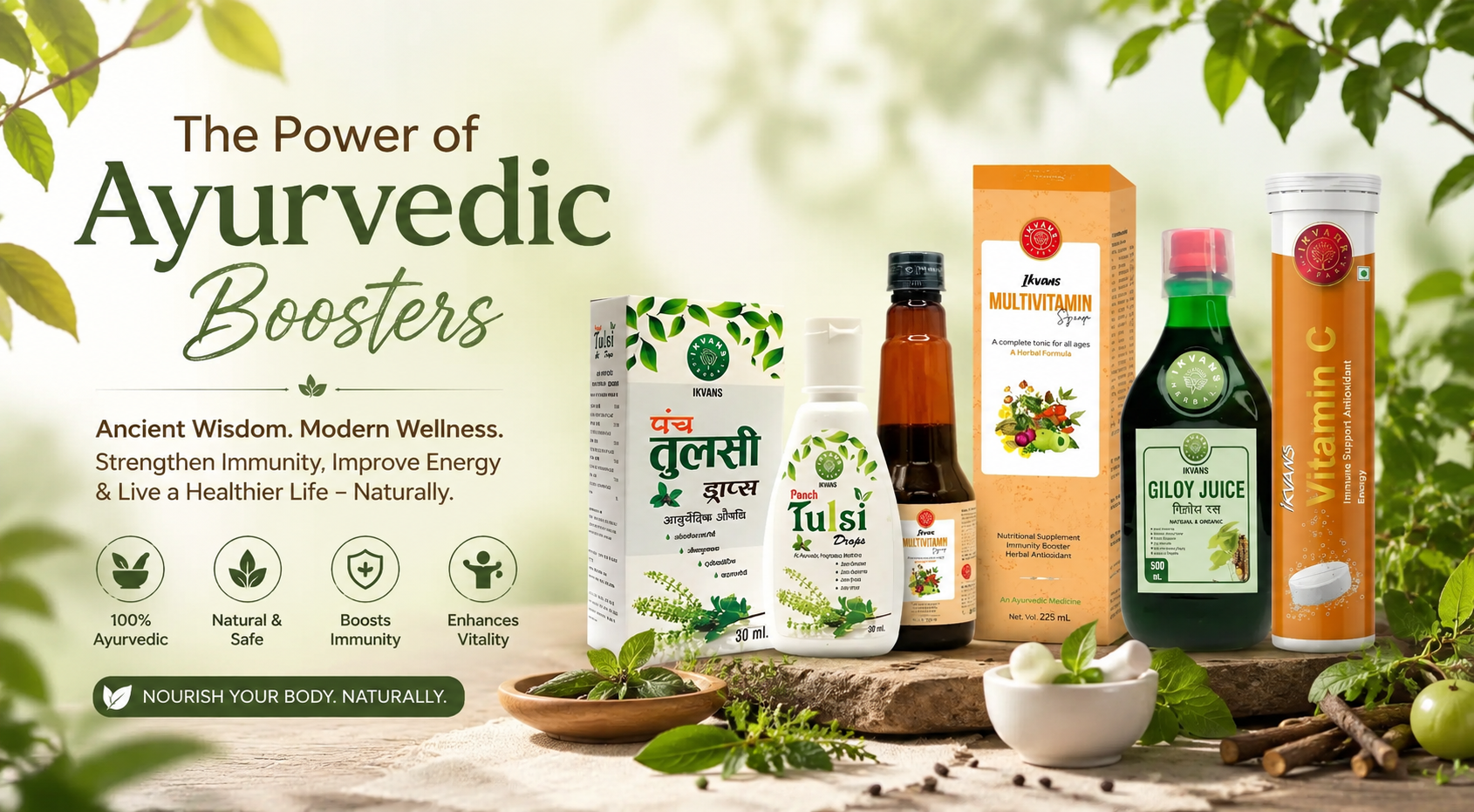
If you're looking to bring authentic, well-formulated Ayurvedic immunity support into your daily routine, Ikvans Care offers traditionally crafted immunity boosters made with ingredients like Giloy, Tulsi, and Ashwagandha formulated the way Ayurveda intended, without unnecessary additives.
Explore Ikvans Care's immunity range and find a formulation that fits your daily wellness routine, alongside the habits covered in this guide.