This is a topic most people search for alone, late at night, too embarrassed to bring up with family or even their doctor. If that is you right now, you are not alone and you have absolutely nothing to be ashamed of.
Piles, clinically known as haemorrhoids, affect an estimated 75% of people at some point in their lives. In India, it is one of the most common anorectal conditions, affecting millions of people across all age groups. Yet because of the stigma attached to anything below the waist, most people suffer in silence for months or years before seeking help often after the condition has already progressed significantly.
The good news is this: Ayurveda has one of the most comprehensive, effective, and non-invasive treatment systems for piles in the world. In many cases, early to moderate piles can be completely resolved through herbal treatment, dietary changes, and lifestyle corrections without a single visit to a surgeon's table.
This guide covers everything you need to know: what piles actually are, why they develop, the Ayurvedic understanding of the condition, the most effective herbal remedies, dietary guidelines, and when surgery actually becomes necessary.

What Are Piles? Understanding the Condition Clearly
Haemorrhoids are swollen and inflamed veins in the rectum and anus similar to varicose veins that can occur in the legs. They develop when excessive pressure on the veins in the lower rectum causes them to swell, stretch, and sometimes protrude.
There are two types. Internal haemorrhoids develop inside the rectum and are usually painless but may cause bleeding during bowel movements you might notice bright red blood on toilet paper or in the toilet bowl. External haemorrhoids develop under the skin around the anus and are often painful, itchy, and uncomfortable, especially when sitting.
Piles are classified in four grades based on severity. Grade 1 involves internal swelling with no prolapse manageable with lifestyle and herbal treatment. Grade 2 involves prolapse during straining that retracts on its own. Grade 3 requires manual pushing back. Grade 4 involves permanent prolapse that cannot be reduced this is when surgical intervention becomes necessary.
The important point: Grades 1, 2, and most Grade 3 cases can be successfully managed and often fully resolved with Ayurvedic treatment and lifestyle changes.
Why Do Piles Develop? The Real Root Causes
Understanding why piles develop is essential for treating and preventing them. The causes go deeper than most people realise:
Chronic constipation is the primary cause in the majority of cases. When you strain during bowel movements over months and years, you are putting enormous pressure on the rectal veins. This is why addressing constipation is the single most important step in treating piles.
A low-fibre diet creates hard, dry stools that require straining to pass. The typical modern Indian diet high in maida, processed foods, and low in vegetables and whole grains is a direct driver of piles.
Prolonged sitting on the toilet, or long hours sitting at a desk, increases pressure in the anal region. Many people sit on the toilet for 15–20 minutes scrolling their phone this habit alone can cause or worsen piles significantly.
Sedentary lifestyle reduces gut motility, contributing to constipation and poor venous circulation in the pelvic region.
Obesity increases abdominal pressure, which compresses the rectal veins and impairs blood return from the anal region.
Pregnancy causes significant pressure on the pelvic veins, making piles extremely common in the third trimester.
Chronic diarrhoea while opposite to constipation also causes irritation and inflammation of the anal region over time.
Low water intake hardens stools and worsens constipation the most direct preventable cause.
The Ayurvedic Perspective: Arsha More Than Just Piles
In Ayurveda, piles are called Arsha literally meaning the enemy (ari) that torments (sha). This name reflects how profoundly the condition affects quality of life. Ayurveda classifies Arsha as one of the Ashtamahagada the eight great diseases because of how difficult it is to treat and how deeply it affects the entire body.
Ayurveda identifies three types of Arsha based on the dominant dosha involved. Vataja Arsha involves dry, hard, dark-coloured haemorrhoids with severe pain primarily driven by Vata dosha. Pittaja Arsha involves soft, inflamed, bleeding haemorrhoids with burning sensation a Pitta condition. Kaphaja Arsha involves large, pale, soft, mucus-secreting haemorrhoids with heaviness and itching a Kapha condition.
Most cases involve a combination of all three doshas, with constipation (Vibandha) as the underlying driver. The Ayurvedic treatment approach therefore works on multiple levels: correcting the doshic imbalance, eliminating Ama from the colon, restoring Agni, and directly treating the haemorrhoidal tissue through both internal herbs and external applications.
The Most Effective Ayurvedic Herbs for Piles
Haritaki The Colon's Best Friend
Haritaki (Terminalia chebula) is the single most important herb in Ayurveda for anorectal conditions. It is the primary herb in Triphala and is classified as a Tridoshic herb meaning it balances all three doshas simultaneously.
For piles specifically, Haritaki works through four mechanisms: it softens stools and promotes easy evacuation without straining, reduces inflammation in the rectal mucosa, has astringent properties that help shrink swollen haemorrhoidal tissue, and improves overall colon health. It is taken at night in warm water for best results.
Nagkesar — The Bleeding Controller
Nagkesar (Mesua ferrea) is Ayurveda's most specific herb for bleeding piles. Its astringent compounds cause vasoconstriction tightening the blood vessels in the haemorrhoidal tissue and reducing or stopping bleeding. It also has significant anti-inflammatory activity in the rectal mucosa. Research supports its traditional use, showing measurable reduction in bleeding episodes within 2–3 weeks of consistent use.
Kankola and Chitrak — For Pain and Swelling
Chitrak (Plumbago zeylanica) is a powerful digestive stimulant and anti-inflammatory herb particularly effective for Vataja and Kaphaja piles. It improves Agni, reduces stagnation in the colon, and reduces the engorgement of haemorrhoidal tissue. It is typically used in formulations rather than alone due to its potency.
Arshoghni Vati — The Classical Formulation
Arshoghni Vati is a classical Ayurvedic tablet formulation specifically designed for piles management. It contains a combination of herbs including Haritaki, Nagkesar, Shudha Parada, and Shudha Gandhaka that work synergistically to reduce haemorrhoidal swelling, stop bleeding, relieve pain, and prevent recurrence. It is one of the most widely used and validated Ayurvedic treatments for all grades of non-prolapsed piles.
Triphala — Foundation Treatment for All Piles
No Ayurvedic piles protocol is complete without Triphala. By addressing the root cause chronic constipation and poor colon health Triphala creates the conditions in which haemorrhoids can heal and prevent recurrence. It softens stools, improves gut motility, reduces colon inflammation, and feeds beneficial gut bacteria. For piles, take one teaspoon in warm water every night before bed without fail.
Aloe Vera — Internal and External
Aloe vera juice taken internally is a powerful anti-inflammatory and stool softener that reduces straining and soothes the inflamed rectal mucosa. Applied externally, fresh aloe vera gel provides immediate relief from the burning and itching associated with external haemorrhoids. It is one of the safest and most accessible Ayurvedic remedies for immediate symptomatic relief.
External Ayurvedic Treatments for Piles Relief
Beyond internal herbal supplements, Ayurveda has a rich tradition of external treatments that provide direct, rapid relief from piles symptoms.
Sitz Bath (Avagaha Sweda): This is one of the most effective immediate relief measures. Fill a shallow basin with warm water and sit in it for 15–20 minutes, 2–3 times daily. For enhanced Ayurvedic benefit, add a teaspoon of Triphala powder or rock salt to the water. The warm water increases blood circulation in the anal region, reducing swelling and pain. This practice is also recommended by modern proctologists a rare case where ancient and modern medicine fully agree.
Castor Oil Application: Applying a small amount of castor oil around the anal area soothes irritated tissue, reduces inflammation, and provides a protective barrier against further irritation. Warm the oil slightly before application for better absorption.
Sesame Oil and Neem: A mixture of sesame oil and neem oil applied externally has antibacterial, anti-inflammatory, and astringent properties. It reduces itching, prevents secondary infection, and shrinks external haemorrhoidal tissue over time with regular application.
Turmeric Paste: A paste of turmeric powder and coconut oil applied to external haemorrhoids reduces inflammation and has natural antimicrobial properties. It is particularly effective for the itching and burning of external piles.
The Piles Diet: What to Eat and What to Strictly Avoid
Diet is not a supplementary part of piles treatment it is the treatment. No herb in the world will cure piles if your diet continues to cause constipation and straining.
Foods That Heal Piles
- High-fibre vegetables: spinach, bottle gourd (lauki), ridge gourd (turai), drumstick, sweet potato
- Whole grains: brown rice, jowar roti, bajra roti, oats — replace maida and white rice completely
- Fibre-rich fruits: papaya, figs (anjeer), guava, pears — papaya enzyme is particularly powerful for digestive health
- Buttermilk (chaas) with roasted jeera — one of the best daily digestive drinks for piles patients
- Soaked raisins: 10–12 raisins soaked overnight in water, eaten on an empty stomach in the morning, is a classical Ayurvedic remedy for constipation and piles
Foods That Worsen Piles — Avoid Strictly
- Spicy food: increases Pitta, inflames the anal mucosa, and worsens bleeding
- Maida and refined carbohydrates: create constipation and hard stools
- Alcohol: dehydrates the body, hardens stools, and increases inflammation
- Red meat: very slow to digest, sits in the colon and ferments
- Deep fried food: extremely low in fibre and high in inflammatory compounds
- Excessive tea and coffee: diuretic effect worsens dehydration and constipation
Lifestyle Changes That Make or Break Piles Treatment
The Squatting Position
This is perhaps the single most important lifestyle change for piles patients. The human body is designed to defecate in a squatting position it straightens the anorectal angle, allowing for complete, effortless evacuation without straining. Using a Western toilet in the sitting position requires significantly more effort to pass stools.
The simple solution: use a small stool (15–20cm high) under your feet while sitting on the toilet. This recreates the squatting angle and dramatically reduces straining. Many proctologists worldwide now recommend this as first-line lifestyle advice.
Never Delay the Urge
Ignoring the urge to defecate is one of the most direct causes of constipation and piles. When you suppress the natural urge, the colon absorbs more water from the stool, making it harder and harder to pass. Always respond to the natural urge promptly.
Limit Toilet Time
Sitting on the toilet for more than 5 minutes is unnecessary and harmful for piles. Leave your phone outside the bathroom. Get in, do what you need to do, and get out.
Daily Walking
A 30-minute walk every morning is the most effective natural remedy for improving gut motility, reducing pelvic congestion, and preventing constipation. It also reduces the abdominal pressure that drives haemorrhoidal engorgement.
Hydration
Drink a minimum of 3 litres of water daily more if you exercise or live in a hot climate. Dehydration is a silent driver of constipation. Start every morning with two glasses of warm water before anything else.
When to See a Doctor: Recognising Serious Symptoms
Ayurvedic treatment is highly effective for Grades 1, 2, and 3 piles. However, certain symptoms require immediate medical evaluation:
- Heavy or persistent rectal bleeding more than a few drops on toilet paper
- Blood that is dark red or mixed with stool rather than bright red this suggests bleeding higher in the digestive tract, not haemorrhoids
- Severe pain that does not improve within a few days
- A lump that cannot be pushed back inside (Grade 4 prolapse)
- Fever, chills, or significant swelling suggesting infection
Do not self-diagnose. Many conditions including colorectal polyps and in rare cases colorectal cancer can present similarly to piles. If you are over 40 and experiencing rectal bleeding for the first time, see a doctor to rule out other causes before beginning home treatment.
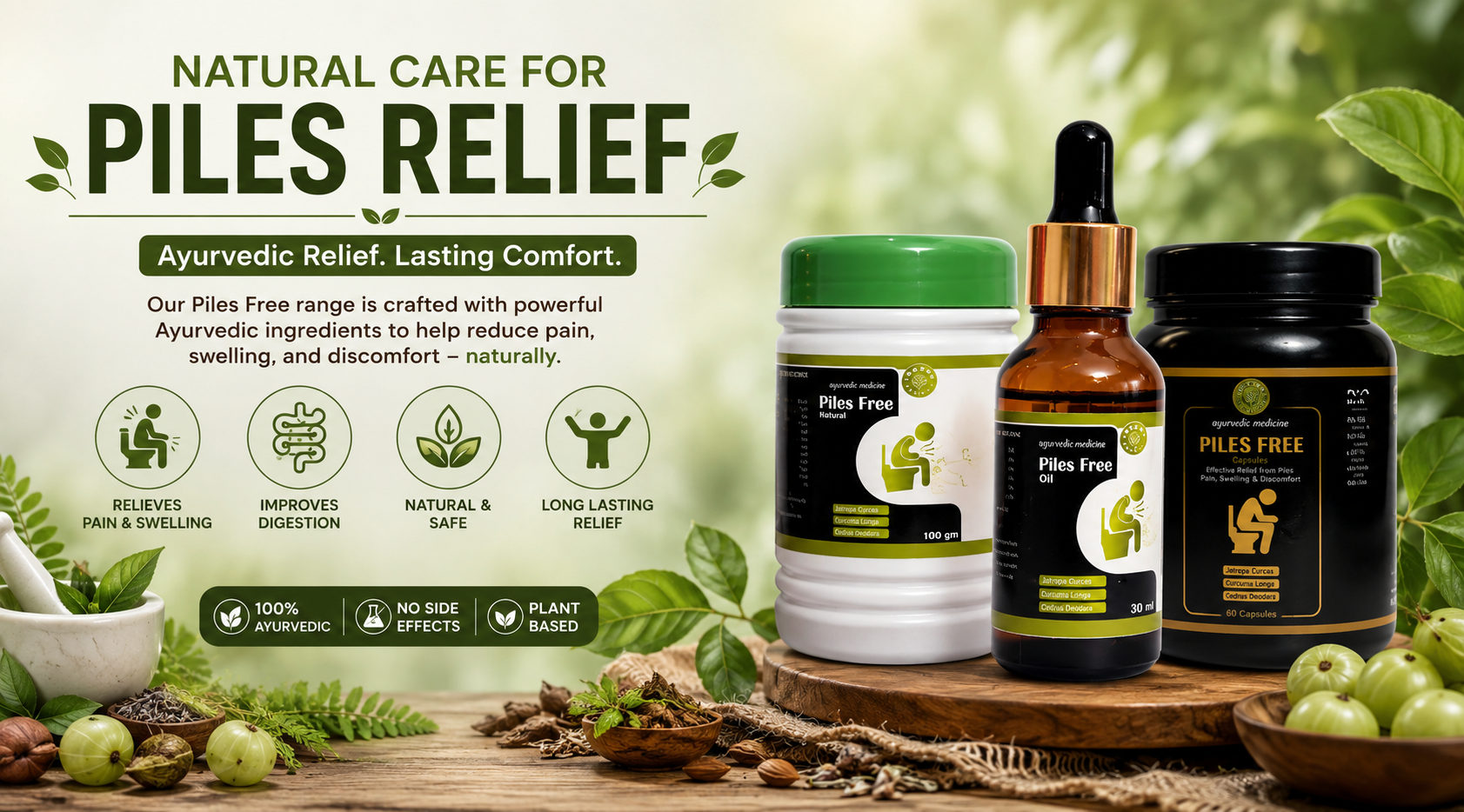
Ikvanscare Piles Free Combo Kit
Ikvanscare's Piles Free Combo Kit is formulated with classical Ayurvedic herbs specifically chosen for comprehensive piles management addressing bleeding, pain, swelling, and the underlying constipation that drives the condition.
The kit combines internal herbal formulations for colon health and haemorrhoidal tissue repair with targeted support for the inflammation and bleeding that make piles so disruptive to daily life. All formulations are free from harsh laxative chemicals, mineral oil, and synthetic astringents.
Shop the Piles Free Combo Kit at ikvanscare.com/products/piles-free-combo-kit
Frequently Asked Questions
Q: Can Ayurveda completely cure piles without surgery?
A: For Grade 1, 2, and most Grade 3 piles, Ayurvedic treatment combined with dietary and lifestyle changes can achieve complete resolution. Grade 4 prolapsed piles typically require surgical or procedural intervention (such as rubber band ligation or haemorrhoidectomy). The key is starting treatment early before the condition progresses.
Q: How long does Ayurvedic treatment for piles take to work?
A: Most people experience relief from bleeding and pain within 2–3 weeks of consistent treatment. Complete resolution of haemorrhoidal tissue typically takes 2–3 months of sustained herbal treatment, dietary correction, and lifestyle changes. Recurrence prevention requires maintaining the dietary and lifestyle changes long-term.
Q: Are there any side effects of Ayurvedic piles treatment?
A: Herbal formulations for piles — particularly those containing Haritaki, Nagkesar, and Triphala — are very well tolerated and have minimal side effects when taken in recommended doses. Excessive dosing of laxative herbs can cause loose stools and cramping — always follow recommended dosing guidelines.
Q: Can pregnant women use Ayurvedic piles treatment?
A: Pregnancy-related piles are very common. Many Ayurvedic remedies — including warm sitz baths, aloe vera gel application, dietary fibre increase, and Isabgol — are safe during pregnancy. However, internal herbal formulations should only be taken on the advice of a qualified Ayurvedic practitioner during pregnancy, as some herbs are contraindicated.
Q: Is it normal to see blood during piles?
A: Bright red blood on toilet paper or in the toilet bowl is the most common symptom of internal piles and is typically not dangerous in small amounts. However, any rectal bleeding should be evaluated by a doctor at least once to confirm it is coming from haemorrhoids and not from another source. Never assume rectal bleeding is just piles without a proper examination.
Q: What is the fastest way to get relief from piles pain at home?
A: The fastest relief combination is a 20-minute warm sitz bath followed by application of aloe vera gel or castor oil to the affected area. This combination reduces swelling and pain within 30–60 minutes for most people. Oral pain relievers can be used if needed, but address the root cause with dietary changes and herbal treatment simultaneously.
Q: Can children get piles?
A: Yes, though it is less common. Childhood constipation, straining, and low-fibre diets can cause piles in children. Dietary correction more fruits, vegetables, water, and less processed food is the primary treatment. Consult a paediatrician before using any herbal formulations for children.
Q: Will piles come back after treatment?
A: Piles can recur if the underlying causes constipation, low fibre intake, straining, and dehydration are not corrected permanently. Ayurvedic treatment addresses both the symptoms and the root cause, but the dietary and lifestyle changes need to be maintained as a permanent habit, not a temporary fix.
Conclusion: Piles Are Not Something You Have to Live With
Millions of Indians are silently suffering from a condition that is highly treatable many even fully curable with the right knowledge and consistency. Piles are not a life sentence. They are your body's signal that your colon needs attention, your diet needs more fibre, and your lifestyle needs more movement and water.
Ayurveda offers a complete system for addressing all of this not just covering up symptoms with creams and suppositories, but rebuilding the digestive health that makes piles impossible to sustain.
Start with the diet. Add Triphala every night. Drink more water. Walk every morning. And let Ikvanscare's targeted herbal formulations do the deeper healing work.
Shop the Ikvans Piles Free Combo Kit at ikvanscare.com/products/piles-free-combo-kit